How to Choose the Best LED Work Light for Your Needs?
Choosing the right LED work light can be challenging. With numerous options available, finding the best fit for your needs is essential. According to industry expert John Smith, “The right LED work light can dramatically improve your efficiency and safety.” This highlights how crucial it is to select wisely.
When shopping for an LED work light, consider the brightness level, portability, and battery life. Some models are incredibly bright, yet heavy and cumbersome. Others might be lightweight but lack sufficient illumination. These trade-offs can impact your overall experience.
Additionally, think about the specific tasks you’ll use the light for. Are you working outdoors in rain or shine? Or indoors with limited space? Each scenario requires a different approach. Unfortunately, many buyers overlook these details, only to regret their decision later. Prioritize functionality over aesthetics for the best results.
Understanding Your Lighting Needs for Work Environments
Choosing the right LED work light starts with understanding your specific lighting needs. Different environments demand various levels of brightness and light distribution. For instance, construction sites often require powerful illumination. A report from the Illuminating Engineering Society indicates that optimal brightness can enhance safety by up to 30%. Bright, even lighting reduces shadows and provides clear visibility, crucial for tasks requiring precision.
Consider the color temperature as well. A cooler light, around 5000K to 6000K, mimics daylight. This can help reduce eye strain and improve focus. On the other hand, warmer lights can create a more comfortable atmosphere but may not offer the clarity needed for detailed work. For outdoor tasks, a durable, waterproof design is essential. Many lights fail in harsh conditions, leading to disruptions. A survey revealed that over 40% of professionals reported using inadequate lighting negatively impacted their productivity.
Battery life is another critical factor. Many users find themselves frustrated with frequent recharges. Industry studies suggest a minimum of 8 hours of continuous use is ideal for most settings. Yet, some LED lights still fall short, leading to unplanned downtime. As you evaluate your options, reflect on these specifics. Understanding where, when, and how you will use the light can lead to better choices.
How to Choose the Best LED Work Light for Your Needs? - Understanding Your Lighting Needs for Work Environments
| Feature |
Description |
Considerations |
| Brightness |
Measured in lumens, brightness determines how well the LED work light will illuminate a space. |
Consider the area size and required visibility levels for your specific tasks. |
| Power Source |
LED work lights can be battery-powered or plug-in. |
Choose based on mobility needs and availability of outlets in the workspace. |
| Durability |
Look for lights that are water-resistant and impact-resistant for tough environments. |
Evaluate the working conditions and potential hazards present. |
| Portability |
Weight and carrying options affect how easily the light can be moved. |
Determine if you need a light for stationary use or if frequent relocation is necessary. |
| Adjustability |
Some lights offer adjustable angles and brightness levels. |
Consider the types of tasks to decide if versatility is needed. |
| Battery Life |
Indicates how long a battery-powered light can operate before needing a recharge. |
Factor in how long tasks typically last without power access. |
| Cost |
Prices can vary widely based on features and quality. |
Set a budget but consider long-term value and operational costs. |
Types of LED Work Lights and Their Specific Applications
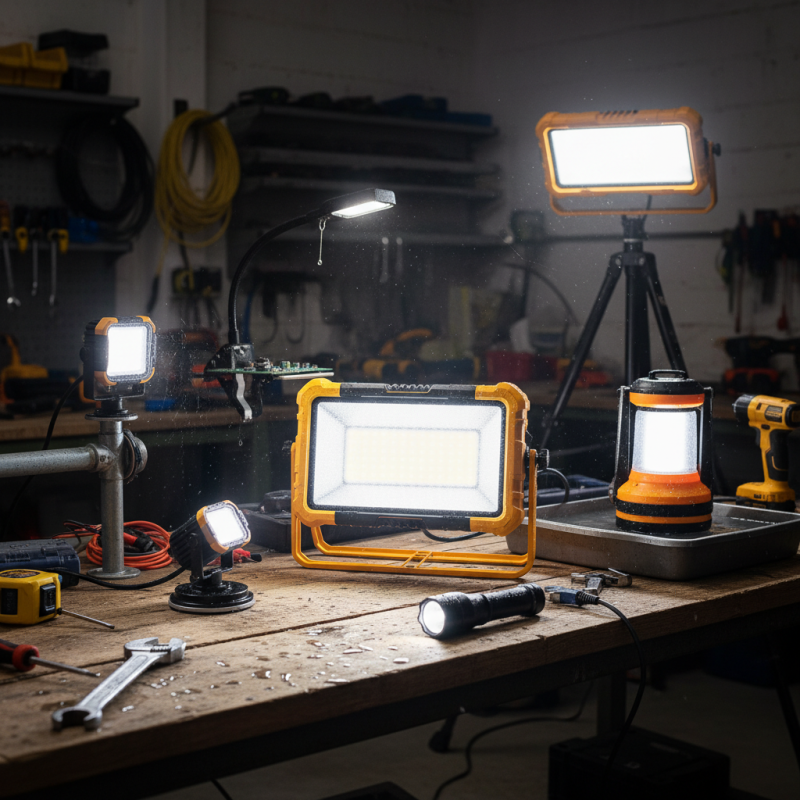
When choosing an LED work light, understanding the different types is crucial. There are various designs tailored for specific applications. For instance, portable LED work lights are ideal for construction sites. They provide flexibility and can illuminate large areas. According to industry reports, these lights can emit up to 10,000 lumens, enough for outdoor tasks.
Task lights are another popular type. They are compact and perfect for detailed work, such as automotive repairs or electronics. These lights often feature adjustable brightness levels, catering to various tasks. A report notes that around 30% of professionals prefer task lights for their directionality and focus. However, some users might find the brightness overwhelming in small spaces.
Lastly, flood lights serve well for larger outdoor areas. They can reach distances over 100 feet with uniform light distribution. Yet, they can be heavy and cumbersome. Users should evaluate their portability needs. Some may find that a balance between light output and weight is necessary. A survey indicated that over half of users consider weight a deciding factor in their choice.
Comparison of Different Types of LED Work Lights
Key Features to Consider When Selecting an LED Work Light
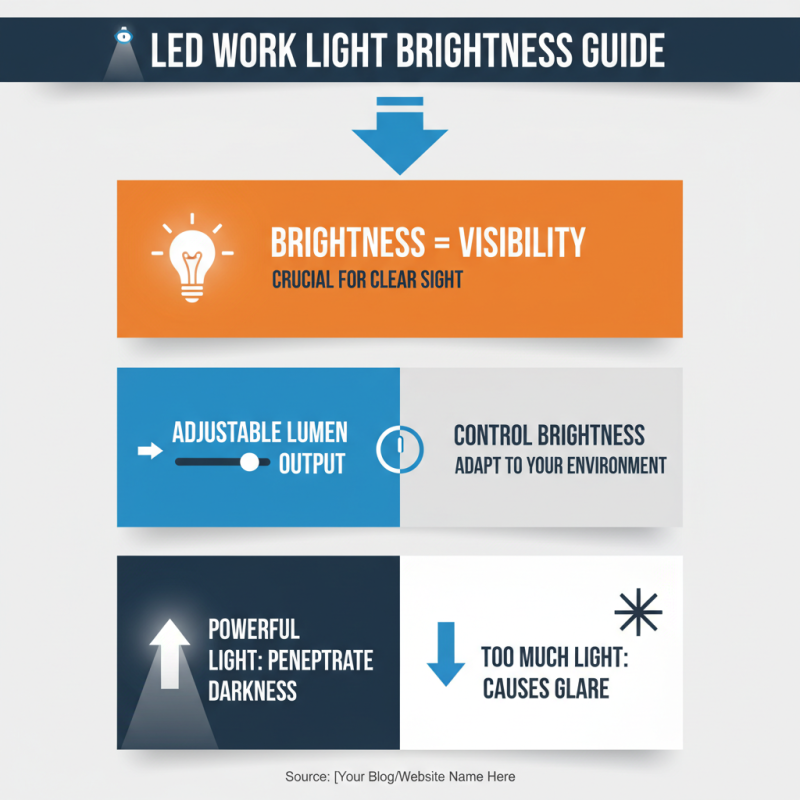
When selecting an LED work light, there are several key features to consider. One of the most critical aspects is brightness, measured in lumens. A work light with 1,000 to 3,000 lumens is suitable for most tasks. This brightness range ensures visibility in darker environments. However, too much brightness can cause glare. Find a balance that suits your work area.
Another important feature is battery life. Many LED work lights run on rechargeable batteries. A model that offers around three to six hours of continuous use is ideal. Be aware that lower-quality batteries may degrade quickly. Consumer Reports indicate that lights with lithium-ion batteries typically provide better longevity, but they can also be more expensive.
Portability matters, too. Look for designs that are lightweight and easy to carry. Flexibility in positioning is essential as well. Some lights feature stands or hooks. These allow for hands-free operation, which can enhance safety. Remember, the size and weight can affect your choice. A larger light may offer more power but could be cumbersome to move around.
Budgeting for Quality: Finding the Right LED Work Light for You
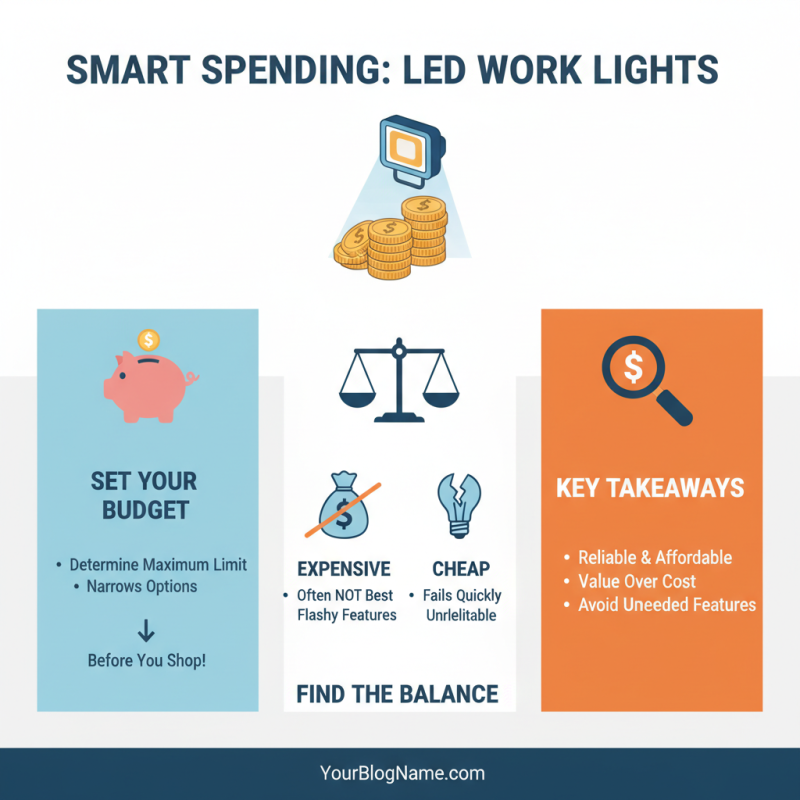
When selecting an LED work light, budgeting plays a crucial role. You want something reliable but affordable. Determine your maximum spending limit before shopping. This helps to narrow down options. Often, the most expensive lights aren’t the best. They may have flashy features you don’t need. On the other hand, cheap lights can fail quickly. Striking the right balance is essential.
Consider the brightness you need. Higher lumens mean brighter light, but that usually comes with a higher price. Make a list of tasks you’ll use the light for. Will it be for indoor projects or outdoor use? These details matter. You might expect the same quality from a budget light as from a premium one. Yet, this may not be realistic. Research is important. Read reviews, compare specifications, and understand what features you truly need versus what’s just nice to have.
Sometimes, finding a reliable option takes time and effort. Don’t rush the decision. Test the lights if possible. A light that seems perfect on paper might disappoint in use. It’s better to be patient and thoughtful. Investing in the right work light can make your projects smoother and safer.