How to Choose the Best Truck Work Lights for Your Needs?
Selecting the right Truck Work Lights is crucial for any professional or DIY enthusiast. Renowned expert in vehicle lighting, John Smith, once said, "The right lights can transform a work site, ensuring safety and efficiency." When you work in challenging environments, effective lighting is not just a luxury; it’s a necessity.
Many options are available today in the truck work lights market. With LED lights gaining popularity, their durability and brightness make them a top choice. Consider the specific tasks you will perform. Will you need focused beams for tight spaces or broader coverage for larger areas? Each scenario demands different lighting solutions.
Feedback from users often highlights the importance of ease of installation and maintenance. Some lights can become cumbersome to set up, leading to frustrations on the job. Seek options that provide a balance of performance, longevity, and user-friendliness. Remember, while shiny features may catch your eye, practical functionality should always take precedence.
Factors to Consider When Selecting Truck Work Lights
Choosing truck work lights involves several critical factors. Light output is essential. A high lumen count indicates brightness. According to industry standards, lights should have at least 2,000 lumens for effective use. This level helps illuminate large work areas.
The beam pattern also plays a vital role. A wide beam offers better visibility over a larger area. In contrast, a focused beam provides distance illumination. Depending on the tasks at hand, each pattern has benefits. Both should be evaluated based on specific needs.
Durability cannot be overlooked. Lights should resist harsh conditions. Ratings such as IP67 indicate resistance to dust and water. Durability ensures long-term reliability, reducing replacement costs over time. Cost-effectiveness involves weighing initial purchase price against lifespan. Frequent replacements can be more expensive in the long run.
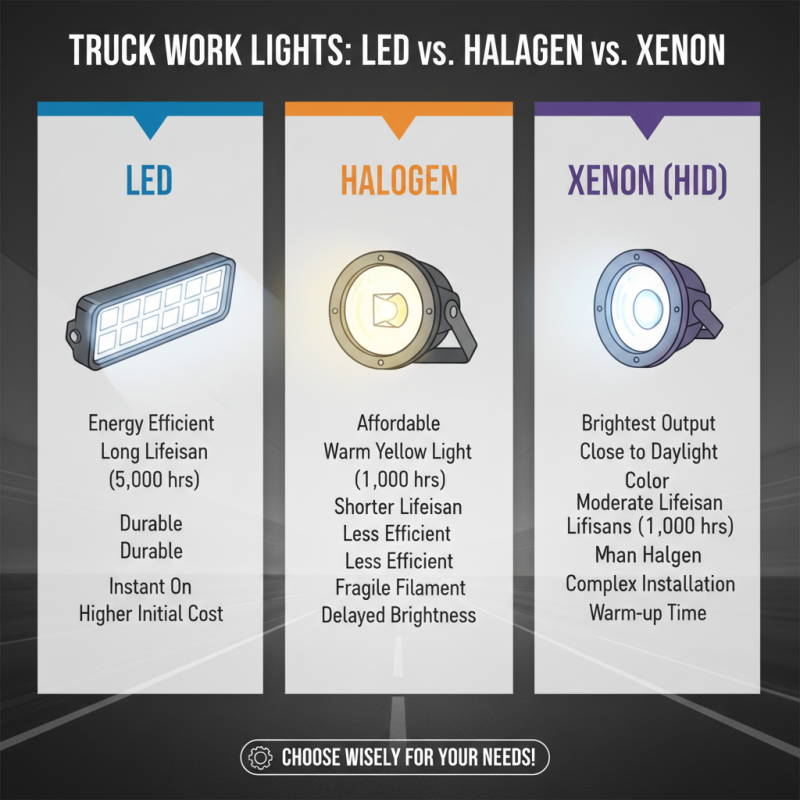
Types of Truck Work Lights: LED vs. Halogen vs. Xenon
When choosing work lights for trucks, understanding the differences between LED, halogen, and xenon is crucial. LED lights are popular due to their energy efficiency. They consume less power and have a longer lifespan. According to industry studies, LED work lights can last up to 50,000 hours. This longevity can lead to cost savings over time.
Halogen lights are another option. They produce a warm light but are less efficient than LEDs. Their lifespan is typically around 1,000 hours. This is a significant drawback for heavy users. Halogen lights can also get very hot. This poses risks in certain situations. On the other hand, xenon lights offer intense brightness and clarity. They are often used in emergency vehicles. However, they can be expensive to replace.
It's essential to consider your specific needs. Terrain, weather conditions, and usage frequency can all influence your choice. Industry data indicates that 45% of workers prioritize brightness in work lights. Meanwhile, 30% focus on energy efficiency. Balancing these needs can be tricky. Users may find themselves needing to weigh short-term costs against long-term benefits. Understanding these factors will help you make a more informed decision.
Brightness Ratings: Understanding Lumens and Watts for Work Lights
When selecting truck work lights, understanding brightness ratings is crucial. Lumens measure the total light output. More lumens equal brighter lights. For instance, a light with 1,000 lumens is significantly more luminous than one with 500 lumens. This difference can impact visibility on dark job sites. Many users don’t realize that a light's wattage does not directly indicate brightness. Watts measure energy consumption; lumens reflect brightness. For example, LED lights are typically more efficient. They can produce higher lumens at lower wattages compared to halogen bulbs.
The International Dark-Sky Association suggests that optimal brightness for work lights is around 1,000 to 3,000 lumens, depending on the task. Areas requiring detailed work might need the higher end of that range. Effective lighting reduces the chance of accidents. However, excessive brightness can create glare. This can hinder vision and cause discomfort. Choosing the right balance is essential. A well-lit workspace often involves testing various lighting options to find the perfect fit.
Keep in mind that the color temperature also plays a role. Light in the 3,000K to 5,000K range mimics daylight, aiding visibility. Some users overlook this aspect. Having a cooler light can enhance focus, while warmer lights may feel cozy but are less effective for detailed tasks. Finding the optimal combination of brightness and color temperature requires careful consideration and sometimes, trial and error.
Brightness Ratings of Truck Work Lights
Durability and Weather Resistance: IP Ratings Explained for Truck Lights
When selecting truck work lights, understanding durability and weather resistance is crucial. This is where IP ratings become essential. IP, or Ingress Protection, defines how well a light fixture resists dust and moisture. An IP67 rating, for instance, means the light can withstand temporary submersion in water, making it ideal for harsh environments. According to industry standards, lights with higher IP ratings tend to last longer and perform better under severe conditions.
Research shows that around 80% of professionals prefer lights rated IP65 or higher for outdoor operations. These lights are not only waterproof but also dust-tight. This durability ensures that they will function properly during rain or snow. However, some users report that even high-rated lights may experience failures in extreme conditions. Investing in robust options is vital, yet cost can sometimes limit selections.
Selecting the right IP rating can be confusing. Some may overlook specific terrain needs, which affects performance. It’s important to evaluate your usual work environment. If you often work in wet conditions, consider lights with IP68 ratings. Flexibility in choice allows for adaptability yet can create uncertainty in decision-making. Achieving the perfect balance between durability and cost requires careful thought and assessment.
Installation and Power Sources: Best Practices for Truck Work Lights Setup
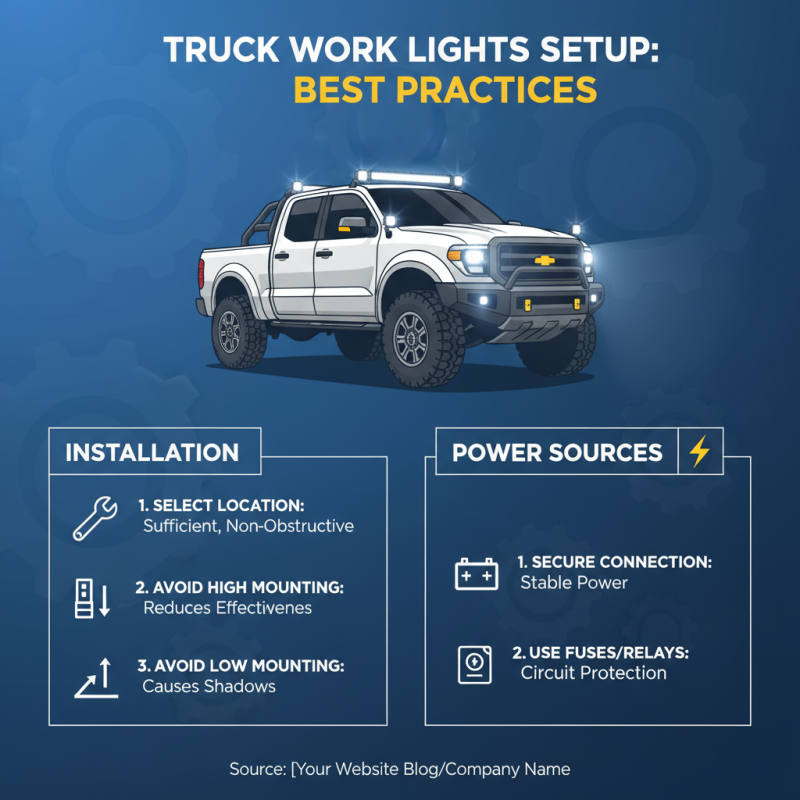
When setting up truck work lights, installation and power sources are crucial. Start by selecting the right location for your lights. Consider areas that provide sufficient illumination without being obstructive. Fixing them too high can reduce their effectiveness. Conversely, positioning them too low can lead to shadows that hinder visibility.
**Tips:** Use adjustable mounts. They allow for easy repositioning. Proper angles enhance light spread, making tasks easier and safer.
Next, choose the right power source. Most truck work lights can be powered via the vehicle’s battery. Others may use standalone batteries or generators. Battery-operated lights offer flexibility, but check their run time. Maintaining a consistent power source helps avoid interruptions during crucial tasks.
**Tips:** Regularly inspect wiring and connections. Loose connections can lead to failures. Always follow manufacturer guidelines for optimal performance.