How to Choose the Best LED Work Lamp for Your Needs: A Complete Guide
Choosing the right LED work lamp is essential for ensuring efficiency and productivity in various tasks, whether it's in construction, automotive repair, or general DIY projects. With numerous options available on the market, understanding the features and specifications that best meet your needs can be a daunting task. A high-quality LED work lamp not only provides bright and focused illumination but also offers durability and energy efficiency, making it a vital tool for any professional or hobbyist.
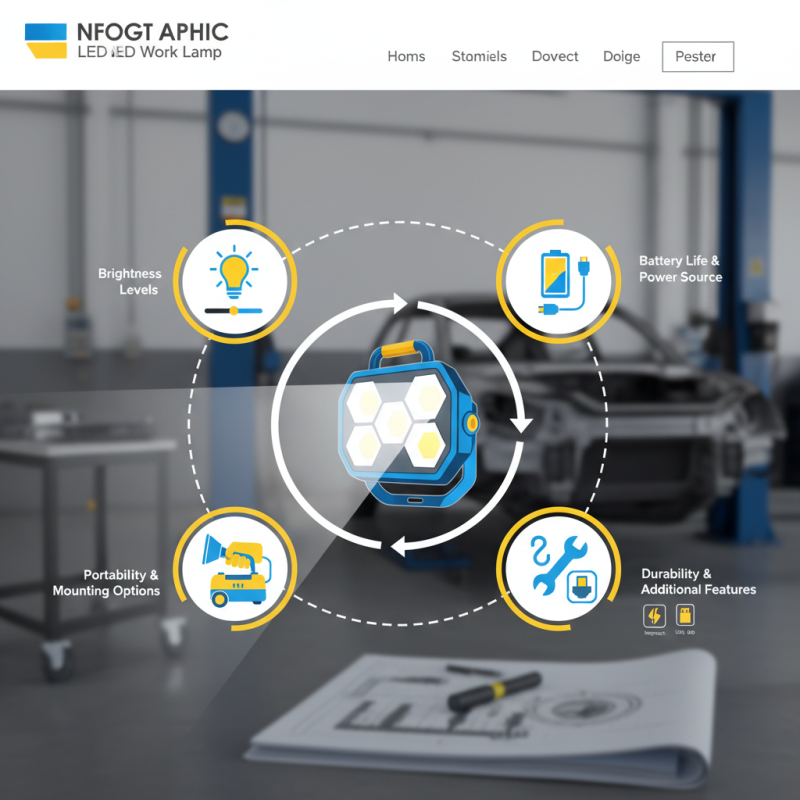
In this complete guide, we will explore the crucial factors to consider when selecting the best LED work lamp for your specific requirements. We will discuss aspects such as brightness levels, battery life, portability, and additional features that enhance usability, helping you make an informed decision. By the end of this guide, you'll gain valuable insights into the various types of LED work lamps available, ensuring you choose the perfect lighting solution that supports your projects effectively and safely.
Understanding the Different Types of LED Work Lamps Available
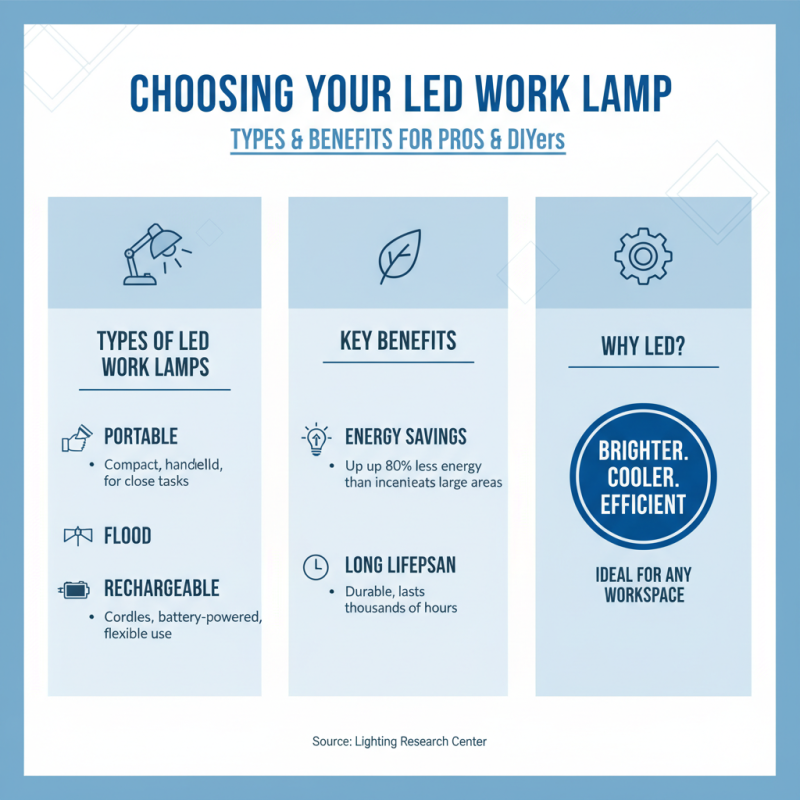
When choosing the best LED work lamp for your needs, it’s essential to understand the various types available in the market. LED work lamps are generally categorized into several types, including portable, flood LED lights, and rechargeable models. According to the Lighting Research Center, LED technology can provide up to 80% energy savings compared to traditional incandescent bulbs, making it a popular choice among professionals and DIY enthusiasts alike.
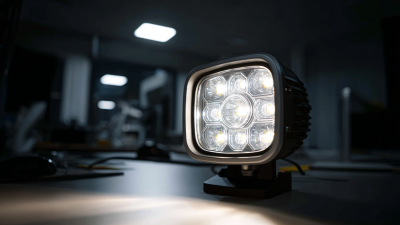
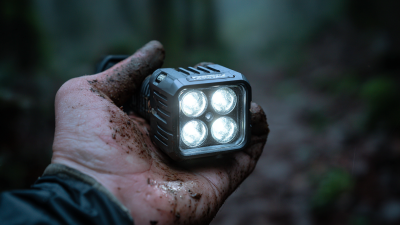
Portable LED work lamps are ideal for job sites where mobility is essential. They often come with battery power options, allowing for flexibility in where and how you work. On the other hand, flood LED lights offer broad illumination and are perfect for larger areas or tasks requiring extensive lighting. A report from the Department of Energy reveals that well-placed flood LED lights can enhance visibility and safety by illuminating spaces more effectively than conventional lighting, thus improving workspace productivity. Rechargeable options add an extra layer of convenience, as they can be used in remote locations without access to power sources, catering to those in construction or outdoor environments.
In addition to the design type, it's crucial to consider brightness levels, measured in lumens, as these will dictate how well the lamp performs in various conditions. The ideal work lamp typically ranges from 1,000 to 5,000 lumens, ensuring that it can handle both intricate tasks and broader applications. With the right choice, users can harness the benefits of LED technology, ensuring efficiency and effectiveness in their lighting solutions.
Key Features to Consider When Choosing an LED Work Lamp
When selecting the best LED work lamp for your needs, there are several key features to consider.
First and foremost, brightness is a critical factor.
Measured in lumens, the brightness level will determine how well you can see in dark or poorly lit conditions.
For detailed tasks, opt for a lamp with a higher lumen output, as this ensures sufficient illumination.
Additionally, consider the color temperature, which impacts how warm or cool the light appears.
A cooler light (around 5000K) is ideal for clarity and concentration, while warmer tones (around 3000K)
may be better for comfort during long work hours.
Another essential feature is the lamp's portability and power source.
Battery-operated lamps provide the flexibility to work in various locations without being tethered to an outlet.
Ensure the battery life is sufficient for your tasks, ideally lasting several hours with a full charge.
If the work lamp is primarily for stationary use, a corded version might offer consistent power
without the need for recharging.
Tips: Always check for durability
and weather resistance, especially if your work is outdoors.
Look for lamps with rugged construction and IP ratings that indicate their resistance to dust and water.
Lastly, consider additional features like adjustable brightness settings, built-in hooks, or magnetic bases that enhance usability in different environments.
Determining the Right Brightness and Color Temperature for Your Needs
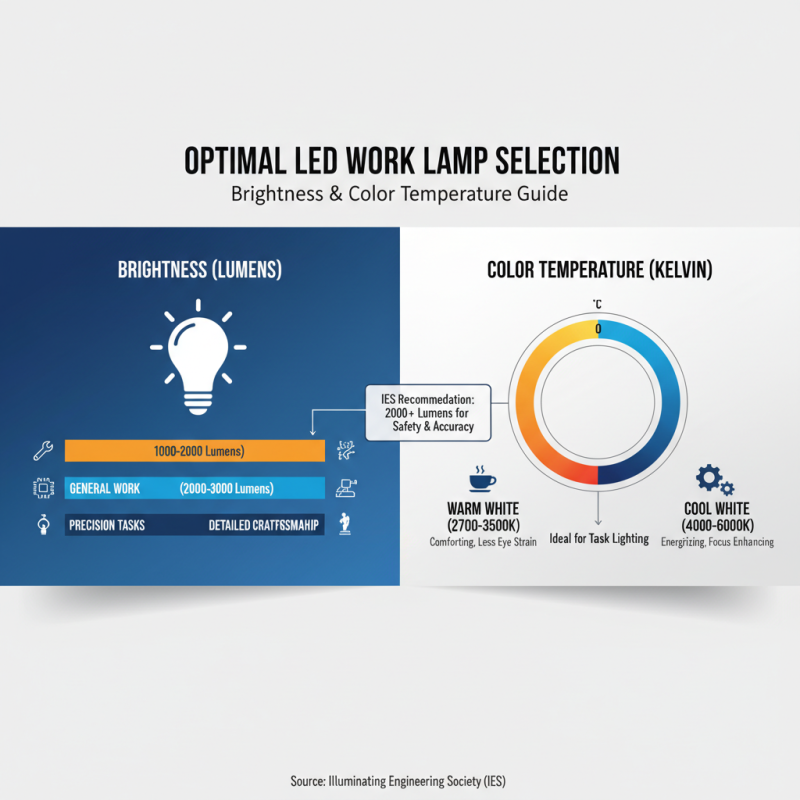
When selecting the ideal LED work lamp, understanding the appropriate brightness and color temperature is crucial for maximizing efficiency and comfort. Brightness is typically measured in lumens, and for most work environments, a range of 1000 to 3000 lumens is recommended. According to the Illuminating Engineering Society (IES), higher lumens are necessary for tasks requiring precision, such as electrical work or detailed craftsmanship, where a minimum of 2000 lumens may be appropriate. This ensures adequate lighting even in dimly lit areas, allowing workers to perform tasks safely and effectively.
Color temperature, measured in Kelvins (K), further influences the effectiveness of a work lamp. A warmer color temperature, around 3000K, creates a cozy, inviting environment ideal for relaxed settings. In contrast, a cooler color temperature, around 5000K to 6500K, mimics natural daylight, enhancing alertness and concentration, making it better suited for detailed tasks. Research from the National Institute for Occupational Safety and Health (NIOSH) indicates that lighting conditions significantly impact worker productivity; thus, choosing the right color temperature can promote better performance and reduce fatigue during extended work hours. Understanding these specifications will guide users in selecting the most suitable LED work lamp tailored to their specific needs.
Portability and Power Source Options for LED Work Lamps
When selecting the best LED work lamp to suit your needs, understanding the importance of portability and power source options is crucial. According to a recent report by the Lighting Research Center, the demand for portable LED work lamps has surged by over 35% in the last three years, as professionals seek flexible lighting solutions across various job sites. Portable LED lamps typically come with various power options, including rechargeable batteries, plug-in capabilities, and solar power, catering to different user preferences and work environments.
For instance, rechargeable battery-powered lamps provide the freedom to work in areas without easy access to electrical outlets, while offering a runtime ranging from 5 to 20 hours depending on intensity settings. A study by the National Institute of Standards and Technology found that LED lamps can save up to 85% in energy costs compared to traditional lighting, making them not only portable but also cost-effective. In contrast, plug-in models may provide a consistent brightness suitable for long-term use in workshops and garages, but their lack of mobility can be a limitation for on-site projects. Solar-powered options are also gaining traction, especially for outdoor tasks, as they harness renewable energy and ensure that users remain off-grid, which is particularly advantageous in remote locations.
Ultimately, choosing the right LED work lamp involves balancing your specific mobility needs with the type of power source that aligns with your workflow. With the continuous advancements in LED technology, the market offers a range of solutions that can fulfill the demands of various professional fields, from construction to automotive repair.
Assessing Durability and Weather Resistance in LED Work Lamps
When selecting an LED work lamp, durability and weather resistance are paramount considerations that can significantly impact performance and longevity. According to a report by the American National Standards Institute (ANSI), work lamps used in industrial settings are at risk of exposure to harsh environmental conditions, including temperature fluctuations, humidity, and dust. A durable work lamp is typically constructed from materials such as high-grade aluminum or impact-resistant plastic, ensuring it can withstand physical impacts and rough handling.
Weather resistance is another critical factor, particularly for outdoor use. The Ingress Protection (IP) rating system, which ranges from IP00 to IP68, indicates a device's resistance to dust and water. For instance, an IP65 rating signifies that the lamp is completely dust-tight and can withstand low-pressure water jets from any direction. Industry standards suggest that LED work lamps intended for outdoor applications should have at least an IP54 rating to ensure they can handle moderate moisture without compromising functionality. Research from the Lighting Research Center highlights that lamps meeting these durability and weather resistance standards result in lower failure rates and maintenance costs over time, thereby offering better value to users.