How to Choose the Best LED Off Road Lights for Your Vehicle?
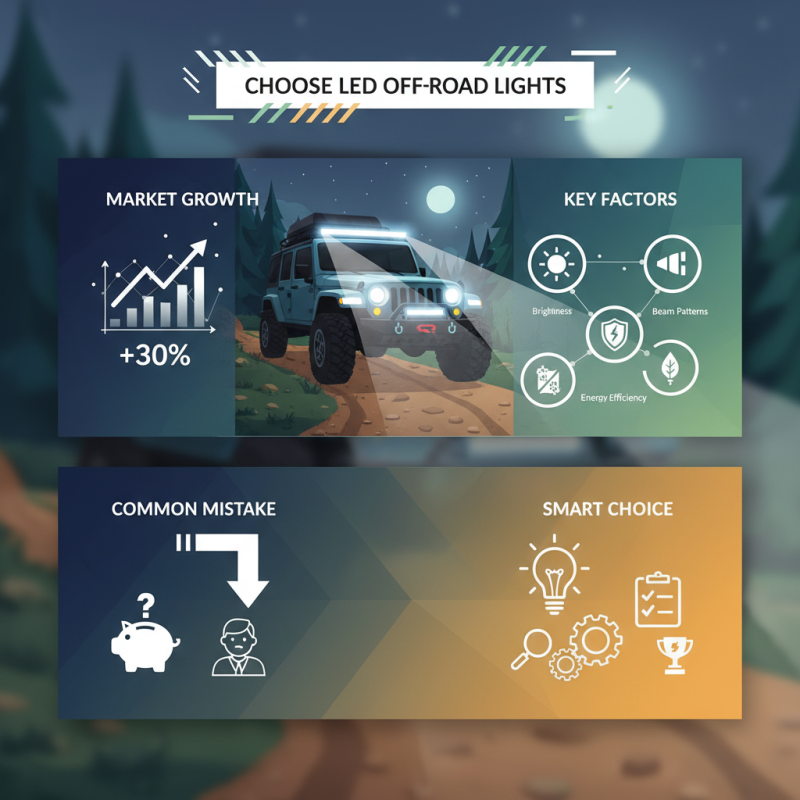
Choosing the right LED Off Road Lights for your vehicle can be challenging. With a variety of options, making a decision requires careful consideration. According to a recent report by the Specialty Equipment Market Association (SEMA), the off-road lighting market has expanded significantly, growing by over 30% in the past five years. This surge highlights the increasing demand for quality lighting solutions among off-road enthusiasts.
LED Off Road Lights are not just about brightness. Factors like beam patterns, durability, and energy efficiency also matter. Many people overlook these aspects and focus primarily on price. It's essential to strike a balance between these attributes to ensure both safety and satisfaction.
Moreover, making impulse purchases can lead to regrets. The wrong choice might leave you with inadequate lighting on dark trails. Understanding the specifications and comparing various products can save time and frustration later. Put in the effort now; it could make a substantial difference in your off-road experience.
Understanding the Importance of LED Off Road Lights for Vehicles
When venturing off the beaten path, visibility becomes paramount. LED off-road lights enhance your experience by illuminating dark trails. A well-lit path allows for safer navigation, especially in rugged terrains. You should consider the different beam patterns. Spotlights focus light far ahead, while flood beams widen your visual field. Both have unique benefits, tailored to specific driving conditions.
Installation might seem straightforward, but placement matters significantly. Improperly aligned lights can create blind spots. This can lead to unexpected hazards. It's crucial to position lights where they provide the best coverage. Also, think about the power consumption of the lights. While LED lights typically use less energy, they still draw from your vehicle's battery. Over time, this can impact battery life, especially on extended trips.
Lastly, user reviews can guide your decision, but remember, experiences vary. A product that works for one may not be ideal for another. Test different options if possible. It’s also worth exploring different light colors. White light mimics daylight, while other hues can enhance contrast in various environments. Making informed choices ensures a safer and more enjoyable adventure.
How to Choose the Best LED Off Road Lights for Your Vehicle?
| Feature |
Importance |
Specifications to Consider |
| Brightness (Measured in Lumens) |
Higher lumens provide better visibility in off-road conditions. |
3000 - 6000 lumens is common for off-road lights. |
| Beam Pattern |
A good beam pattern ensures optimal lighting direction. |
Spot, flood, or combo patterns are available. |
| Energy Efficiency |
More efficient lights reduce strain on the vehicle's battery. |
Look for lights with low wattage and high output. |
| Durability and Weather Resistance |
Essential for maintaining functionality in harsh conditions. |
IP67 or higher rating for water and dust resistance. |
| Mounting Options |
Flexibility in installation for different vehicle types. |
Check for compatible mounts and brackets. |
| Color Temperature |
Affects visibility and reduces glare at night. |
5000K to 6000K is ideal for clarity. |
Key Features to Consider When Selecting LED Off Road Lights
When choosing LED off-road lights, consider brightness. Measured in lumens, higher numbers mean more light. Look for options that provide at least 5,000 lumens for effective illumination. Beam patterns also matter. Spot beams focus light on a specific area, while flood beams disperse light across a wider area. Think about your driving conditions. A combination of both might be ideal for diverse terrains.
Durability is crucial in off-road settings. Check for lights with a robust housing, often made from aluminum or polycarbonate. Waterproof ratings indicate resistance to moisture. An IP67 rating suggests strong protection against water and dust. Easy installation can save time and effort. Some lights come with brackets or mounting kits that simplify the process.
The color temperature of the light can influence visibility. A 6,000K light provides a daylight-like appearance, enhancing clarity during night drives. Look into additional features like dimming options or built-in ventilation. However, some lights may struggle with heat dissipation, leading to reduced lifespan. It's important to read user reviews, as they often reveal real-life performance. A few options might not live up to expectations. Exploring these details leads to better choices.
Comparison of Key Features in LED Off Road Lights
This chart compares key features of LED off road lights, including brightness measured in lumens, beam distance, durability rated by IP standard, energy efficiency in watts, and price in dollars. Understanding these dimensions can help in selecting the best option for your vehicle.
Different Types of LED Off Road Lights and Their Uses
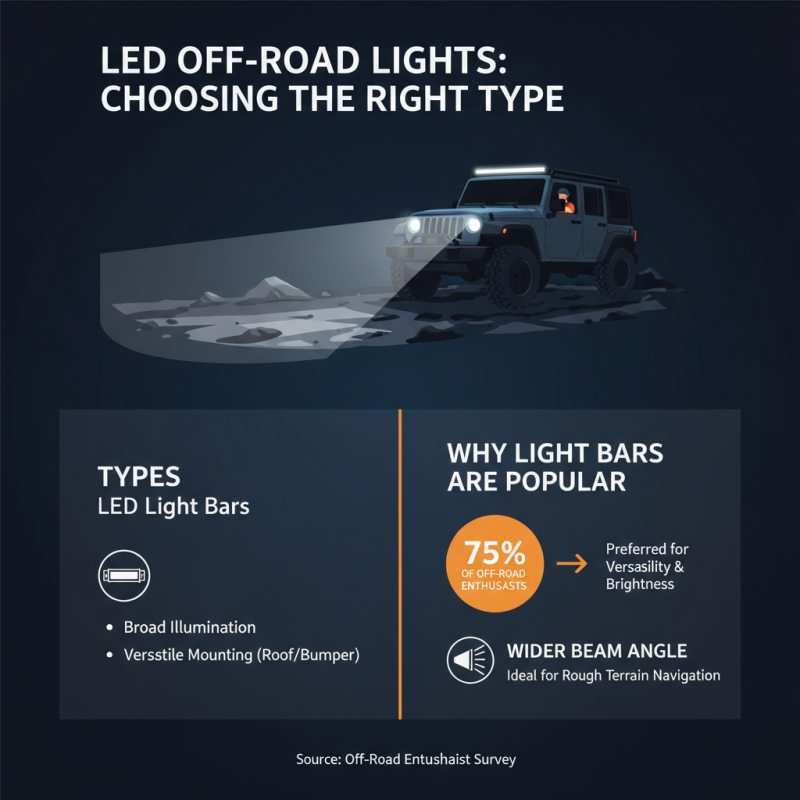
When selecting LED off-road lights, understanding their types is crucial. LED light bars are popular, offering broad illumination. They can be mounted on roofs or bumpers. Studies show that 75% of off-road enthusiasts prefer light bars for their versatility and brightness. These models typically provide a wider beam angle, perfect for navigating rough terrains and obstacles.
Another option is spotlights. These lights focus illumination into a narrow beam. They excel in distance visibility, ideal for spotting distant hazards. Research indicates that spotlights can reach over 1000 feet, making them vital for night driving in remote areas. However, they may lack the full coverage needed for close-range visibility. Balancing both types can enhance safety.
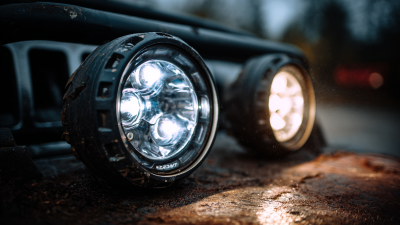
Additionally, pod lights are compact and mounting-friendly. They work well for specific areas like under the vehicle or on the sides. Their small size can be limiting, yet they provide effective focused lighting. Users often overlook their potential. Each light type has strengths and weaknesses. It’s essential to reflect on what fits your driving needs best.
Determining the Right Brightness and Beam Pattern for Your Needs
Choosing the right brightness and beam pattern for your LED off-road lights is crucial. Brightness is typically measured in lumens. For off-road lights, a range of 2,000 to 10,000 lumens is common. Higher lumens mean brighter lights. However, more lumens do not always equate to better visibility. It's vital to balance brightness with effective beam pattern.
Beam patterns play a significant role in how light is distributed. Flood beams spread light over a wide area, ideal for close-range visibility. Spot beams offer focused light for long distances. Many lights combine both types. A report by the Society of Automotive Engineers notes that a well-defined beam pattern can significantly enhance driving safety at night.
Tips: Choose luminance according to your terrain. For rocky trails, heavier flood lights may work best. For open spaces, a narrow spot beam might be more appropriate. Remember, too much brightness can be blinding to others. Adjusting the angle of your lights can prevent this, but doing it correctly takes practice. Be cautious. Over-illumination can detract from your overall safety.
Installation Tips and Maintenance for LED Off Road Lights
When installing LED off-road lights, ensure your vehicle’s wiring can handle the load. Many off-road lights require a considerable amount of power.
A report by the Off-Road Industry Association indicates that improper installation can lead to electrical failures.
It’s crucial to use heavy-duty wiring and fuses to prevent these issues.
Tip: Always check your vehicle’s voltage before installation. A voltage drop can affect the performance of your lights. This can lead to flickering or dim lighting, which can be dangerous on rugged terrain.
Routine maintenance is key for longevity. Regularly inspect the wiring and connectors for any signs of wear. Water and dust can corrode connections over time.
A study showed that 30% of light failures are due to poor maintenance.
Tip: Clean your lights with a soft cloth and check for any cracks. Small imperfections can grow into bigger problems.
It's easy to overlook but essential for safety. Neglecting these aspects may compromise both the effectiveness and lifespan of your off-road lights.