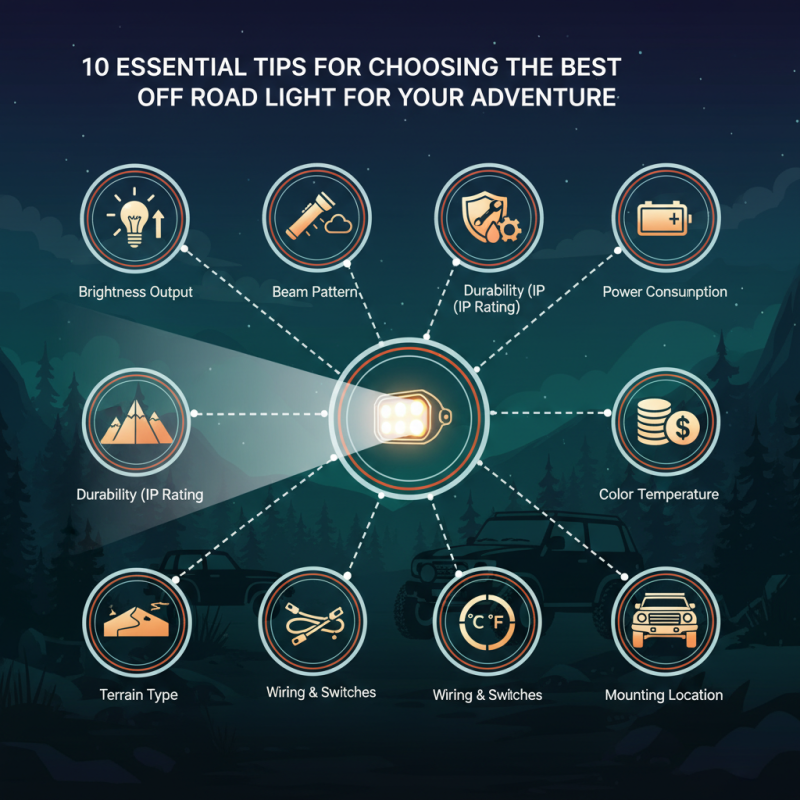
10 Essential Tips for Choosing the Best Off Road Light for Your Adventure
When preparing for an off-road adventure, one of the most critical components of your vehicle is the lighting system. The right Off Road Light can not only enhance visibility in difficult terrain but also significantly increase safety during your excursions. Whether you’re navigating through dusky forests, rocky mountain paths, or remote desert trails, investing in high-quality off-road lighting ensures that you remain aware of your surroundings and avoid potential hazards. However, with an overwhelming number of options available on the market, selecting the best Off Road Light can be daunting.
Understanding the key features and specifications is essential in making an informed decision. Factors such as brightness output, beam pattern, durability, and installation ease play a significant role in determining the effectiveness of off-road lights. Additionally, considering your specific needs and the type of terrain you’ll encounter can help narrow down your choices. This guide provides ten essential tips that will equip you with the knowledge needed to find the ideal Off Road Light that complements your adventurous spirit while keeping you safe on the trails. By following these tips, you can ensure that your off-road experience is illuminated with confidence and clarity.
Understanding Your Off-Road Lighting Needs for Adventure
When embarking on an off-road adventure, understanding your lighting needs is crucial for both safety and enhancing the experience. Off-road terrains can be unpredictable, and the right lighting can significantly improve visibility, allowing for safe navigation during nighttime excursions or in low-light conditions. According to industry studies, nearly 70% of off-road accidents occur at night or in poorly lit areas, emphasizing the necessity for adequate lighting solutions tailored to your specific environment.
One essential tip when selecting the best off-road light is to assess the type of terrain you'll encounter. For example, settings with heavy vegetation may benefit from lights that offer a wide beam pattern, providing sufficient peripheral visibility. In contrast, rocky landscapes may require focused beams to illuminate distant obstacles. Furthermore, consider the intensity of the light; lumens are often used to measure brightness, with higher lumen outputs offering better visibility. A report by the Off-Road Light Manufacturers Association suggests that optimal off-road lights should produce at least 3,000 lumens for effective performance in challenging conditions.
Another important consideration is the durability of the lighting system. Off-road adventures often involve exposure to harsh elements, so selecting lights that are both waterproof and resistant to impact can prevent premature failure. For instance, LED lights typically offer greater longevity and energy efficiency compared to traditional halogen options. Ultimately, fully understanding your off-road lighting needs not only ensures you choose the best lights but also enhances your safety and enjoyment in the great outdoors.
Types of Off-Road Lights: Pros and Cons Explained
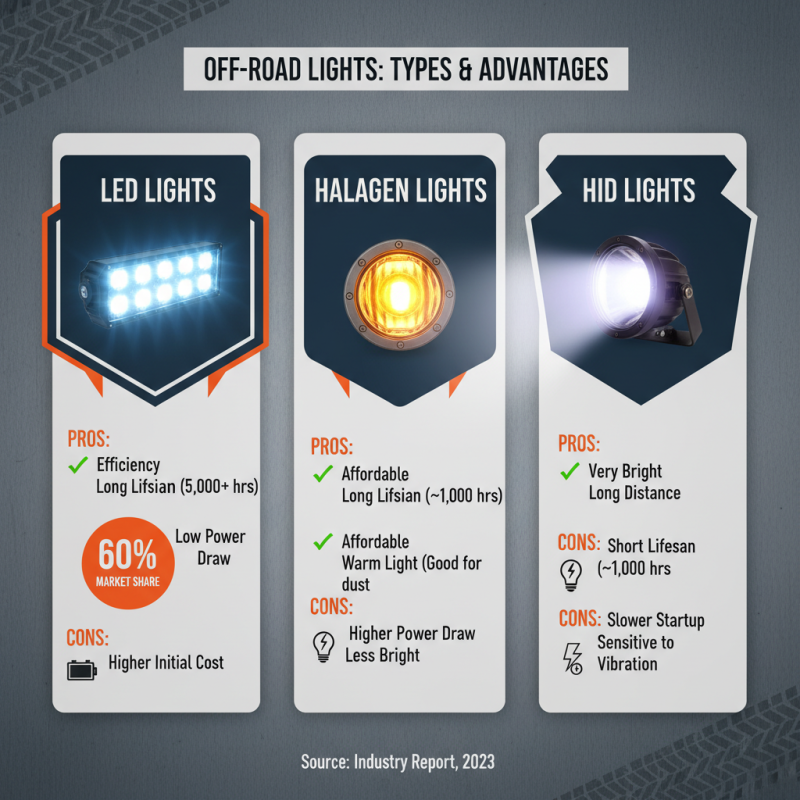
When considering off-road lights, it's essential to understand the various types available and their respective advantages and disadvantages. The most common types of off-road lights include LED lights, halogen lights, and HID (High-Intensity Discharge) lights. According to a recent industry report, LED lights are gaining popularity, accounting for approximately 60% of the market share due to their efficiency and longevity. They consume less power, produce brighter light output, and have a lifespan that can exceed 50,000 hours compared to halogen lights, which typically last around 1,000 hours.
Halogen lights, while cheaper upfront, tend to be less durable and consume more energy, making them less ideal for extensive off-road adventures. On the other hand, HID lights can provide an intense bright light that’s particularly beneficial for long-distance visibility; however, they are more complex to install and can be less reliable in harsh conditions. Moreover, higher lumen ratings in HID lights often come with a significant heat production, which can lead to added maintenance issues. Analyzing the pros and cons of each light type will help adventurers make informed decisions tailored to their specific needs while navigating challenging terrains.
Evaluating Brightness: Lumens vs. Wattage Considerations
When choosing the best off-road light for your adventures, understanding the metrics of brightness, particularly lumens and wattage, can significantly impact your decision. Lumens measure the amount of light emitted, while wattage indicates the power consumption. For off-road applications, a higher lumen count—typically between 3,000 and 10,000 lumens—is recommended to ensure adequate visibility in rugged terrains or at night. According to a report by the Off-Road Lighting Association, lights exceeding 6,000 lumens are becoming the standard for serious off-roading enthusiasts, providing clear illumination up to hundreds of feet ahead.
Consider the purpose of the off-road light when evaluating your options. If you frequently drive in foggy or rainy conditions, look for lights that have a higher wattage, as this can lead to increased power for a more focused beam. It's essential to balance lumens with wattage effectively; a light with high lumens but low wattage may not perform as expected under demanding conditions.
Tip: Always check for the light's beam pattern as well. A well-distributed beam can help you spot potential obstacles before they become a problem during your adventures. Additionally, be mindful of durability features such as water resistance and shock-proof ratings to ensure your lights can withstand the rigors of off-roading environments.
Brightness Comparison of Off-Road Lights: Lumens vs. Wattage
Mounting Options: Where and How to Install Off-Road Lights
 When it comes to off-road adventures, proper mounting options for your off-road lights are crucial for maximizing visibility and safety. Depending on your vehicle type and the terrain you intend to tackle, there are various locations where lights can be effectively mounted. The front bumper is a popular choice, allowing for an unobstructed view of the path ahead. A 2022 industry report highlighted that about 55% of off-road enthusiasts prefer mounting lights lower on the vehicle for better illumination of obstacles, a practice that can help reduce glare and enhance nighttime visibility.
When deciding where to install your lights, consider the angling and height of the mount to ensure optimal light distribution. Angling lights slightly downwards can prevent them from blinding other drivers while still illuminating the terrain effectively. A recent survey indicated that off-roaders who took the time to carefully choose their mounting options reported a 30% increase in overall safety during night excursions.
Remember, choosing the right mounting option also involves consideration of durability and weather resistance. Make sure the mounting hardware is made from high-quality materials designed to withstand the harsh conditions of off-road driving. Ensure that the installation approach does not interfere with the vehicle’s functionality, such as towing or clearance needs. These strategic tips will help you enhance your off-road experience while ensuring you're equipped with the best lighting solution for any adventure.
Budgeting for Quality: Finding the Best Value in Off-Road Lighting
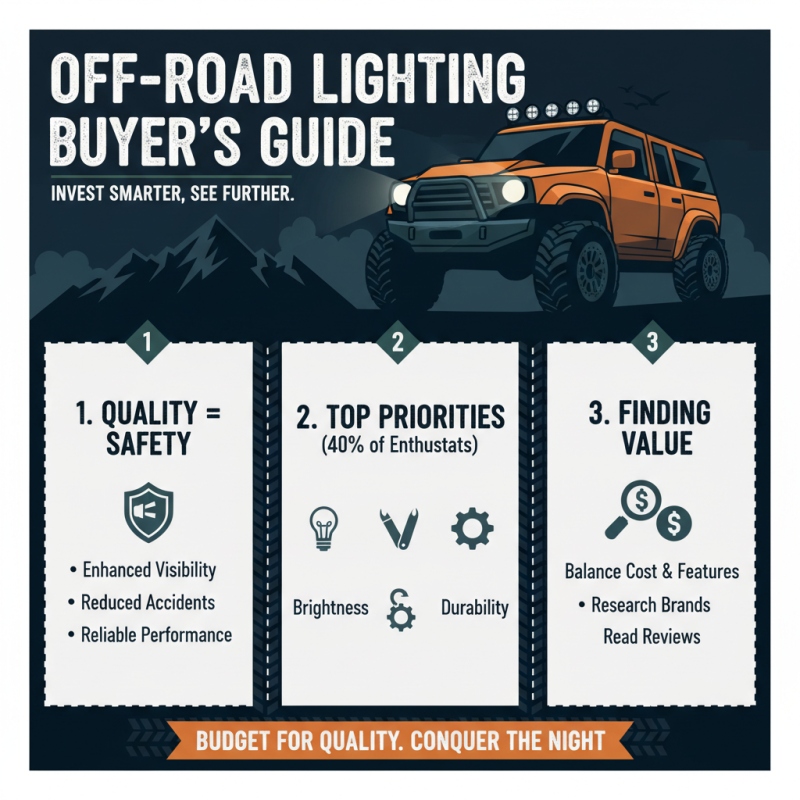
When it comes to selecting the best off-road lighting, budgeting for quality is paramount. Research indicates that quality off-road lights can significantly enhance visibility and safety during nighttime adventures. A recent industry report revealed that nearly 40% of off-road enthusiasts prioritize brightness, versatility, and durability when investing in lighting solutions. However, with an extensive range of options available, it's crucial to find the best value without compromising on essential features.
Investing in higher-quality off-road lights often translates to better performance in harsh conditions. According to a survey conducted by the Off-Road Lights Association, lights with a lumen output of 2,500 or higher are typically more effective for trails and rugged terrains. This level of brightness ensures improved visibility and reduces the risk of accidents, making it a wise investment for adventurers. Moreover, experts recommend considering the light's beam pattern and build materials, as these factors directly influence the longevity and efficiency of the lighting system. By thoroughly evaluating these considerations, adventurers can secure high-quality off-road lights that offer excellent performance while fitting within their budget constraints.