10 Essential Tips for Choosing the Best Truck Work Lights
When it comes to choosing the best Truck Work Lights, the options can be overwhelming. Many people overlook key details that can affect their decision. Proper lighting is crucial for safety and efficiency on the job. A reliable light source ensures visibility during those late-night repairs or early morning hauls.
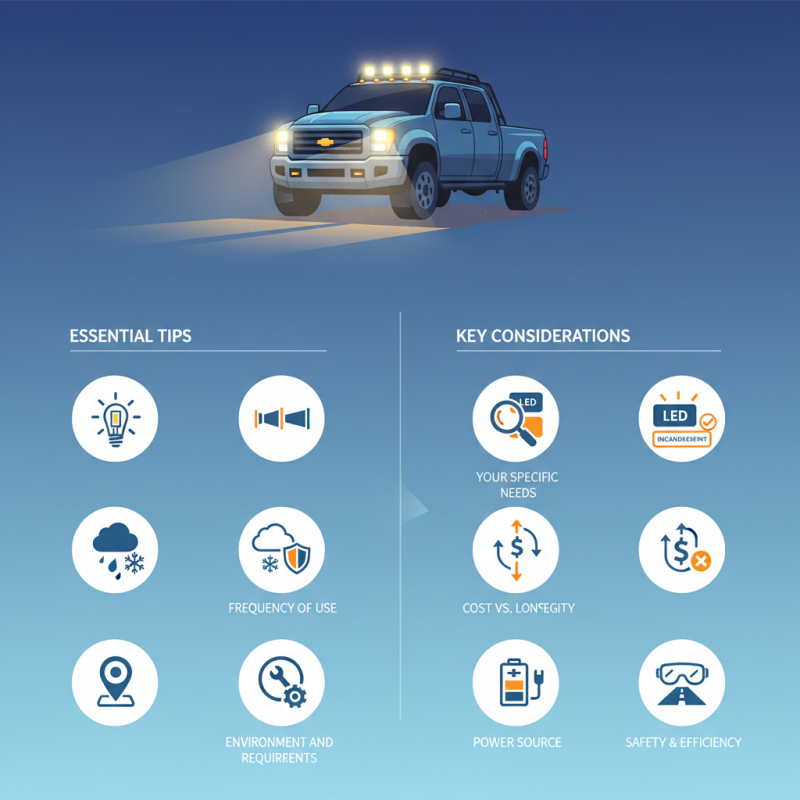
Consider the various types available. LED lights are popular for their brightness and longevity. Incandescent options can be less expensive, but they may not last as long. Think about the beam pattern too. A wide beam can illuminate a larger area, while a focused beam offers direction.
It’s also important to evaluate your specific needs. Are you working in extreme weather conditions? Waterproof and durable lights are essential. Reflect on how often you'll use them and where. The right choices will make your job easier, but the selection process can feel daunting. Understanding your environment and requirements is key to making a wise purchase in the world of Truck Work Lights.
Understanding Lumens: How Brightness Impacts Truck Work Light Performance
When selecting truck work lights, understanding lumens is crucial. Lumens measure the total visible light output. More lumens generally mean brighter lights. For instance, a typical 100-watt incandescent bulb produces about 1600 lumens. In contrast, many LED work lights can deliver between 2500 to 3000 lumens, providing ample brightness for challenging tasks.
However, brightness isn't everything. Excessive lumens without proper distribution can create glare. This can hinder visibility rather than enhance it. Reports from industry sources suggest that a beam pattern focused on a broad area is essential. A high lumen count should be paired with an effective design. Many users need to reflect on whether their current work lights strike this balance.
Brightness does impact performance, but efficiency matters too. Some lights are brighter but consume more power. Others may offer adequate brightness while being energy-efficient. Industries report that LED options often lead in this area. They last longer, reducing replacement costs. Choosing the right lumens requires careful consideration of the job's specific demands and the light's overall function.
Different Types of Work Lights: LED vs. Halogen vs. Xenon
When considering work lights for trucks, understanding the differences in technology is key. LED, halogen, and xenon lights each come with distinct features. LED lights are energy-efficient and offer brighter illumination. They convert about 80-90% of their energy into light. In contrast, halogen bulbs are less efficient, with only 20% converting into visible light. For those on a budget, halogen lights can be appealing. However, they generate more heat and have a shorter lifespan.
Xenon lights, or high-intensity discharge lights, produce a very bright light. They emit light due to an electric arc between electrodes. Reports show that xenon lights provide about 300% more light than traditional halogen bulbs. Yet, they may also come with complexities. Each type of light has its pros and cons, necessitating careful selection based on specific needs. LED options often last 25,000 hours or more, while halogen bulbs might only give around 1,000.
Consumers often overlook these differences. While many choose based on brightness alone, longevity and energy efficiency also play significant roles. The right choice can significantly impact work efficiency. Understanding the specific task requirements is crucial when selecting the most suitable type of truck work light.
Comparison of Different Types of Work Lights for Trucks
Evaluating Beam Patterns: Spot, Flood, and Combination Options Explained
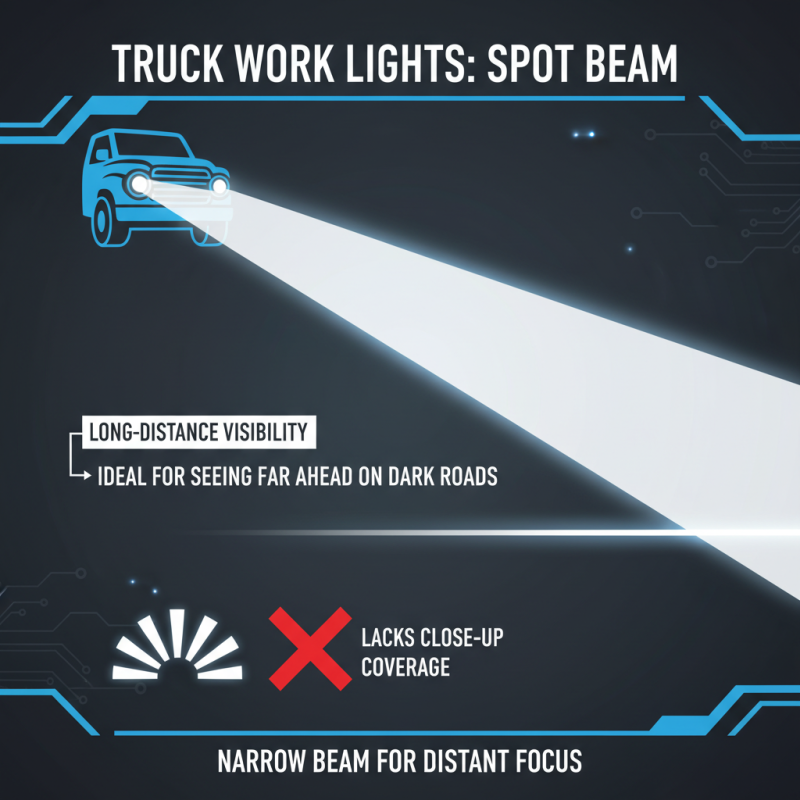
When choosing truck work lights, beam pattern is crucial. Each type serves a specific purpose. Spot beams focus light into a narrow beam, ideal for long-distance visibility. They work well for seeing far ahead on dark roads. However, spot beams may lack coverage for close-up tasks.
Flood beams, on the other hand, disperse light over a wider area. This ensures you can see objects around your truck clearly. They are perfect for working in tight spaces. Yet, they may not illuminate distant objects effectively. A balanced combination beam can provide both benefits. It ensures you have visibility for both near and far tasks.
Evaluating your specific needs is essential before making a decision. Think about your work environment. Do you often drive in remote areas? Or do you mostly work close to your vehicle? Your choice should reflect that. It's easy to overlook how these factors impact your light selection. Pay attention to your surroundings and make informed choices.
Durability and Weather Resistance: Key Features for Lasting Performance
When choosing truck work lights, durability and weather resistance are crucial. You need lights that can withstand harsh conditions. Consider materials that resist corrosion. Metal housing often offers better protection than plastic. Look for lights that have an IP rating. This rating indicates their resistance to dust and water. A higher rating means better durability.
Hard environments can take a toll on cheaper lights. They may fail when exposed to rain or snow. Investing in quality ensures longevity. LED lights are often more resilient. They produce less heat and consume less power. This can contribute to a longer lifespan under challenging conditions.
Reflect on where you will use the lights. Will they be exposed to heavy rain or extreme temperatures? Think about this before making a choice. Sometimes, people overlook these factors and regret it later. A break in functionality at critical moments can be frustrating. Don’t underestimate the importance of good weather resistance. Choose wisely for better performance in the long run.
Power Consumption and Efficiency: Balancing Brightness with Energy Use
Choosing the right truck work lights involves careful consideration of power consumption and efficiency. It's essential to strike a balance between brightness and energy use. According to recent industry reports, LED lights consume up to 80% less energy than traditional halogen bulbs. This efficiency translates to longer battery life and lower operational costs. However, not all LEDs are created equal. Some may not provide the expected brightness, leading to potential safety issues.
Brightness is crucial for work environments, but overusing energy is a concern. A study found that excessive brightness can lead to increased energy costs without significantly improving visibility. Instead, selecting lights with adjustable brightness settings can help. These options allow users to customize their lighting based on specific tasks. Proper wattage and lumens are important. Too many lumens can be wasteful, while too few can compromise safety.
The initial cost of high-efficiency lights might be daunting, but the long-term savings are substantial. An investment in better technology can yield lower power consumption and improved work conditions. Yet, many users still choose cheaper, less efficient options. This can lead to regrets later on when energy bills climb and productivity suffers. Balancing brightness and power use is essential for smart, sustainable choices.
10 Essential Tips for Choosing the Best Truck Work Lights
| Light Type |
Brightness (Lumens) |
Power Consumption (Watts) |
Efficiency (Lumens/Watt) |
Lifespan (Hours) |
| LED Flood Light |
5000 |
50 |
100 |
25000 |
| Halogen Work Light |
3000 |
75 |
40 |
2000 |
| Xenon Work Light |
4500 |
65 |
69.23 |
1500 |
| Fluorescent Work Light |
3600 |
40 |
90 |
7000 |
| Battery-Powered LED |
2000 |
20 |
100 |
5000 |