2026 How to Choose the Best Driving Lights for Your Vehicle?
Choosing the right driving lights for your vehicle can be challenging. There are many options available, and each serves a different purpose. Understanding your needs is crucial when selecting driving lights.
Driving lights enhance visibility at night and during bad weather. They can significantly improve safety on the road. However, not all lights are created equal. Factors like brightness, beam pattern, and durability play a vital role in your decision-making process. A well-researched choice will improve your driving experience.
Some people overlook the importance of quality. Cheap driving lights may save money initially, but they can lead to issues later. It's wise to consider trusted brands and user reviews. Gathering insights from others can aid in making a better decision. Driving lights should be an investment in safety and performance, and it’s essential to choose wisely.
Choosing the Right Type of Driving Lights: A Comprehensive Guide
When choosing driving lights, understanding the types available is crucial. LED, halogen, and xenon options exist, each with unique benefits. LED lights are energy-efficient and long-lasting. They illuminate the road with clarity but can be pricey. Halogen lights are budget-friendly and easy to replace. However, they may not offer the same brightness as LED options. Xenon lights provide intense illumination. They often produce a blueish tint, which may not be everyone’s preference.
Consider your driving conditions as well. If you frequently drive on dark back roads, brighter lights can enhance your safety. Fog lights can cut through haze and rain, making them an excellent addition. You may also think about installation requirements. Some lights are easier to install than others. DIY installation is possible for those with basic skills. However, hiring a professional can prevent potential mistakes.
Reflecting on your needs is essential. What is your primary purpose for the lights? Is it for visibility or aesthetics? Your answer will guide your choice. Take the time to research and evaluate options carefully. In the end, the right driving lights can improve your driving experience significantly. Make informed decisions, and trust your instincts.
2026 Driving Lights Comparison
This chart compares different types of driving lights available for vehicles based on their brightness (in lumens) and beam distance (in meters). The data reflects the efficiency and performance of various light types, helping you make an informed choice for enhanced visibility and safety.
Evaluating Lumens and Color Temperature for Optimal Visibility
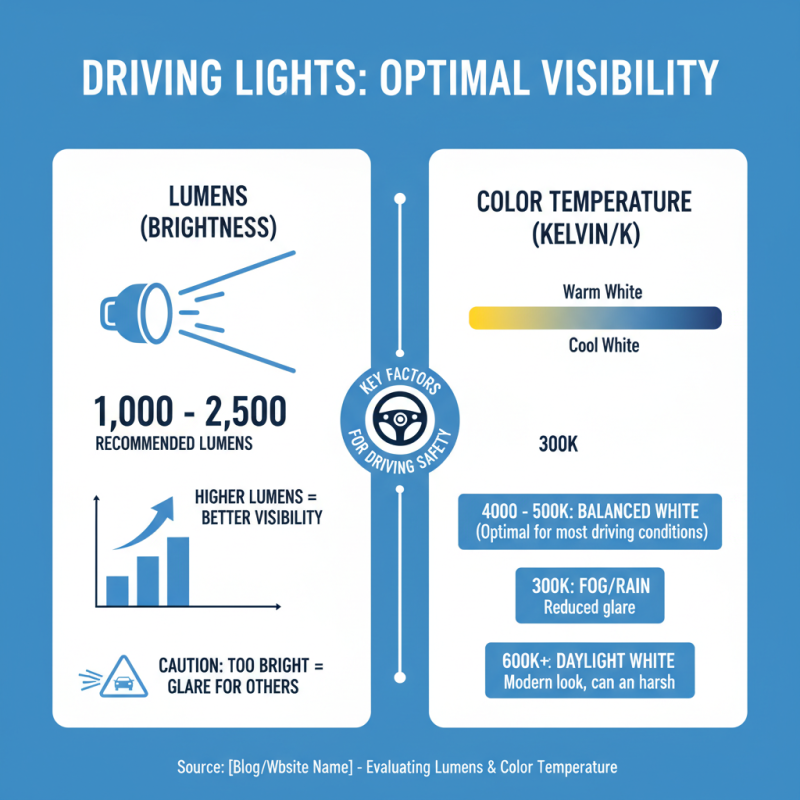
When selecting driving lights for your vehicle, lumens and color temperature are critical factors. Lumens measure the brightness of the light. Higher lumens generally mean better visibility. A range of 1,000 to 2,500 lumens is common for driving lights. However, it’s important to balance brightness with the purpose. Overly bright lights can cause glare for oncoming drivers.
Color temperature is expressed in Kelvin. A cooler temperature, around 5,000K to 6,000K, provides a whiter light. This enhances contrast and improves visibility during nighttime driving. Closer to daylight, the light reduces eye strain. But, too much blue in the light might lead to a less appealing experience.
Choosing driving lights involves personal needs and vehicle type. Some drivers may prefer warmer tones for misty conditions. Others seek the clarity of cooler temperatures for dark roads. It’s valuable to reflect on the driving environment. Consider where you most often drive. Make informed choices based on experience and unique preferences.
Understanding Beam Patterns: Flood vs. Spot Lights
When it comes to driving lights, understanding beam patterns is crucial.
Two common options are flood lights and spot lights.
Flood lights provide a wide, even spread of light. They illuminate a larger area, making them ideal for off-road driving or working in dim conditions.
This type of light excels in situations where visibility is needed across a broad zone.
On the other hand, spot lights create a focused beam.
They project light further down the road, enhancing your ability to see obstacles from a distance.
This is particularly useful for high-speed driving. However, while they offer distance, their narrow pattern may leave some peripheral areas dimly lit.
It’s essential to assess your driving needs carefully.
Choosing the right beam pattern can be challenging. It’s important to reflect on your usual driving environments.
Do you often navigate dark trails or highways? Each option has its pros and cons.
Personal preference can also play a role. Ultimately, the goal is to enhance your safety while driving.
Making the right choice involves a balance of features and situations.
Legal Considerations for Driving Lights in Different Regions
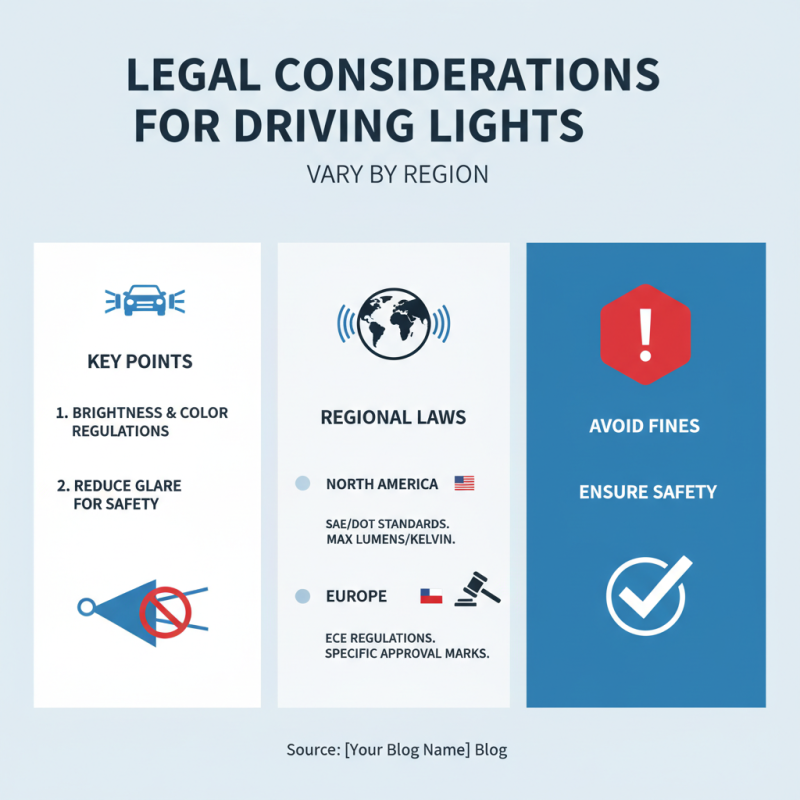
When selecting driving lights for your vehicle, legal considerations vary by region. Understanding these laws is essential to avoid fines and ensure safety. In many areas, specific regulations dictate the brightness and color of driving lights. These laws help reduce glare for other drivers and enhance road safety during nighttime driving.
In some regions, the use of certain colors may be restricted. For example, blue lights are often reserved for emergency vehicles. Always check local regulations before installation. It’s crucial to ensure your chosen lights comply. Not doing so could lead to potential legal issues or fines.
Tips on choosing compliant driving lights:
- Research local laws. Each state or country may have unique requirements.
- Opt for lights that come with documentation for compliance.
- Consult a professional if unsure. They can guide you through the installation process.
Driving lights are essential for improved visibility. However, they must be used responsibly. Reflect on your choices to make safe decisions on the road. Prioritize both your safety and others'.
Tips for Installation and Maintenance of Driving Lights
When installing driving lights, proper positioning is crucial. They should be mounted at a height that maximizes visibility without blinding oncoming drivers. The ideal height is often between 16 to 24 inches above the ground. Studies show that incorrectly positioned lights can reduce driver reaction time by up to 30%. Choose a location that allows for a clear line of sight, while also being mindful of wind resistance and potential damage.
Regular maintenance ensures the longevity of your driving lights. It's essential to check the wiring for any signs of wear and tear. According to industry reports, a staggering 40% of driving light failures result from poor electrical connections. Keeping the lenses clean helps maintain optimal brightness. Dirt and grime can reduce light output by as much as 50%. Routinely inspect the light's housing for cracks or other imperfections, as these can lead to moisture ingress.
Inadequate maintenance can lead to serious safety risks. Light output may diminish, causing visibility issues during nighttime driving. Being proactive in care can prevent costly replacements and keep you safe on the road. Taking the time to reflect on these aspects can lead you to better choices and enhanced safety.