Top Tips for Choosing the Best Tripod Work Light?
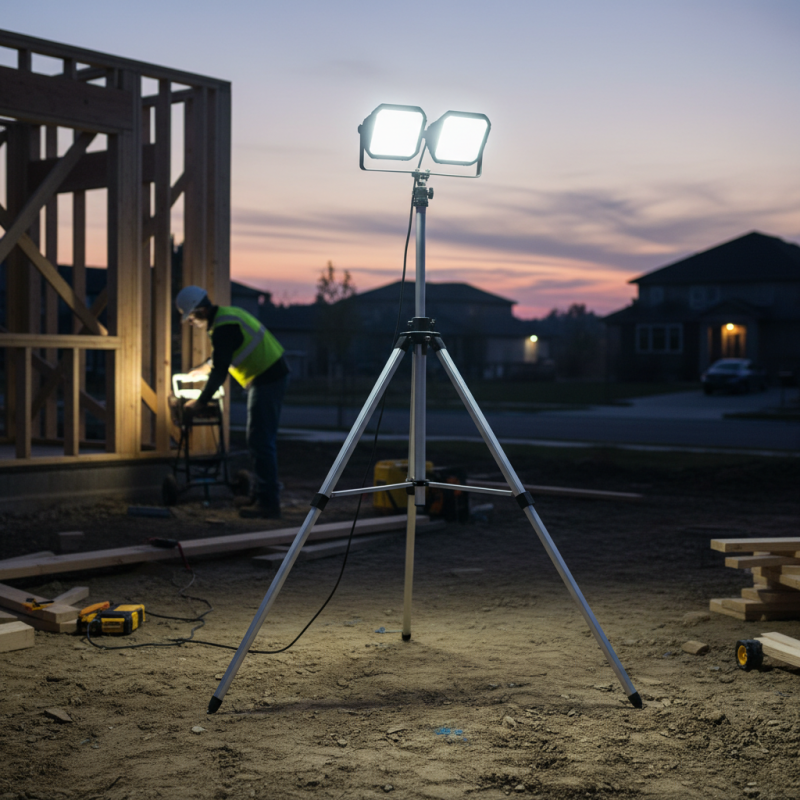
Choosing the right tripod work light can be a challenging task, yet it is essential for various tasks. A good tripod work light provides stability and brightness, making projects easier. These lights cater to different needs, whether for outdoor activities or home repairs.
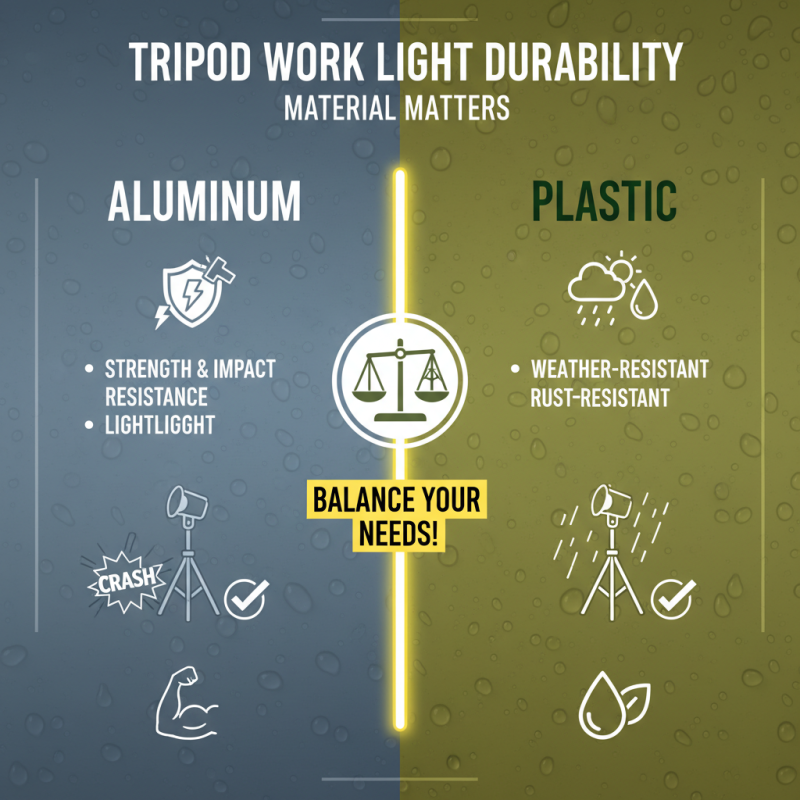
When selecting a tripod work light, consider factors like brightness, portability, and durability. Some models may appear sturdy, but they often lack reliability. It’s essential to assess your unique requirements. Are you working in tight spaces? Do you need multiple brightness settings?
With the vast array of options available, it's easy to feel overwhelmed. Visualizing your workplace can lead to better choices. Not all tripods are created equal. Some are too bulky while others might not provide sufficient height adjustment. The right balance of features is crucial in making a confident decision.
Understanding Tripod Work Lights: Key Features to Consider
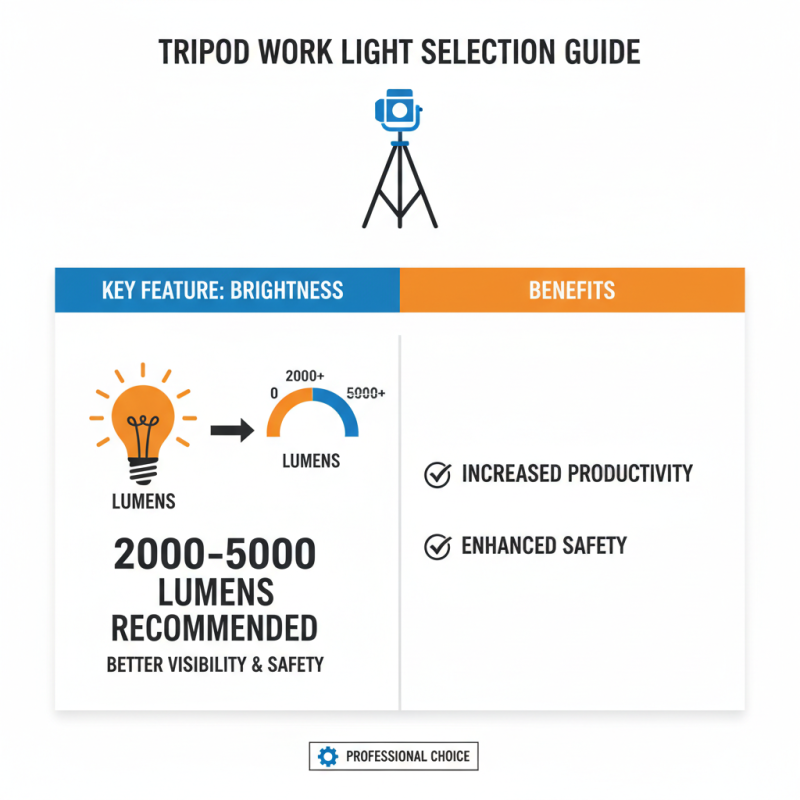
When selecting a tripod work light, it's essential to understand its key features. Brightness is a primary factor, measured in lumens. A higher lumen count provides better visibility. Professional reports suggest that lights between 2000 to 5000 lumens are ideal for most work environments. This brightness ensures safety and productivity.
Consider the light's color temperature. A daylight-like spectrum, around 5000K to 6500K, minimizes eye strain and enhances color accuracy. Many workers report improved focus and reduced fatigue with such lighting conditions. Portability is also crucial. A lightweight design can enhance mobility, especially for outdoor jobs. Look for adjustable tripods that can be set to various heights.
Tips: Check the wattage efficiency. An energy-efficient light saves on electricity bills while still being powerful. Always inspect the build quality. Cheaper models may falter quickly, leading to safety hazards. Lastly, think about the light's runtime. Some lights offer long battery life, while others may need constant recharging, impacting workflow.
Evaluating Brightness: Lumens and Wattage in Work Light Performance
When selecting a tripod work light, evaluating brightness is crucial. Lumens and wattage are key factors that determine performance. Lumens measure light output; the higher the lumens, the brighter the light. For instance, a work light with 2000 lumens can illuminate an entire workshop effectively. In contrast, 500 lumens might only serve for close-up tasks.
Wattage speaks to energy consumption. A work light with low wattage can save energy but must balance brightness. A 100-watt light might produce 800-1200 lumens, making it suitable for larger areas. Yet, it can also mean increased electricity costs if used extensively. Some reports suggest using LED lights for efficiency. They provide higher lumens per watt, making them an excellent choice. However, not everyone realizes that the initial cost can be higher.
Also, consider your specific needs. More lumens might seem better, but too much brightness can cause glare. This could lead to eye strain and discomfort. Evaluate your workspace’s size and tasks to find a fit. Balancing brightness and comfort is essential. Knowing the right lumens and wattage can elevate your work experience.
Brightness Evaluation of Tripod Work Lights
Portability Factors: Weight, Size, and Foldability of Tripod Work Lights
When selecting a tripod work light, portability is essential. Weight is a critical factor. A heavier light might provide more stability, but it can be cumbersome. Look for options that balance weight and ease of transport. Frequently movers appreciate lightweight models. They are easier to carry from site to site.
Size is another important aspect. A compact design can fit in smaller spaces. If you plan to use the light in tight areas, consider height adjustments. Some models can expand and collapse efficiently. This makes them versatile for various projects. Always check how compact a tripod can become when stored.
Foldability is often overlooked. A foldable tripod can save space in your vehicle or workshop. Some units require more effort to set up. Reflect on how much time you want to spend on assembly. A good design will minimize hassle. Not all models will meet your expectations on usability. To avoid frustration, personally test the folding mechanism if possible. Keep these factors in mind to make a practical choice.
Energy Efficiency: LED vs. Traditional Bulbs for Tripod Work Lights
When choosing a tripod work light, energy efficiency is key. LED lights are generally more efficient than traditional bulbs. They consume less power and last longer. This means fewer replacements and lower energy bills.
Consider the brightness. LEDs can deliver high lumens without consuming much energy. This is essential for detailed tasks. However, some may find LED lighting too stark. It's crucial to test various options to see what works best for you.
Tip: Always check the lumens rating when selecting a light. A higher lumen count signifies brighter light. Compare this to your workspace needs. Also, keep in mind the color temperature of LEDs. A cooler temperature can enhance visibility but might feel too clinical in certain settings.
Traditional bulbs are more familiar. They offer a warm glow, which may be preferable for comfort. However, they burn hotter and waste energy. They require more frequent replacements, adding up over time. Reflect on what you need most. Is it efficiency, comfortable lighting, or both?
Top Tips for Choosing the Best Tripod Work Light
| Feature |
LED Bulbs |
Traditional Bulbs |
| Energy Efficiency |
High (80-90% efficiency) |
Low (10-20% efficiency) |
| Lifespan |
Up to 25,000 hours |
1,000 hours |
| Heat Emission |
Minimal |
High |
| Cost |
Higher initial cost |
Lower initial cost |
| Light Quality |
Bright, even illumination |
Flickery, less consistent |
| Durability |
Highly durable |
Less durable |