Top 10 Driving Light Options for Better Visibility on the Road?
Driving lights are essential for ensuring visibility on the road, especially during dark or adverse weather conditions. Renowned automotive lighting expert, Sarah Johnson, emphasizes this point by stating, "The right driving lights can transform your nighttime driving experience."
In recent years, advancements in technology have led to various options for driving lights. From LED to halogen systems, each type offers unique benefits. For instance, LED lights are known for their brightness and energy efficiency. Meanwhile, halogen lights provide a warm glow that's easy on the eyes.
Choosing the right driving light is not just about brightness. It's about improving safety and comfort. Drivers must consider factors like road conditions and personal needs. Many overlook these details, leading to suboptimal decisions. In the quest for better visibility, a thoughtful approach to selecting driving lights can make all the difference.
Best Types of Driving Lights for Enhanced Nighttime Visibility
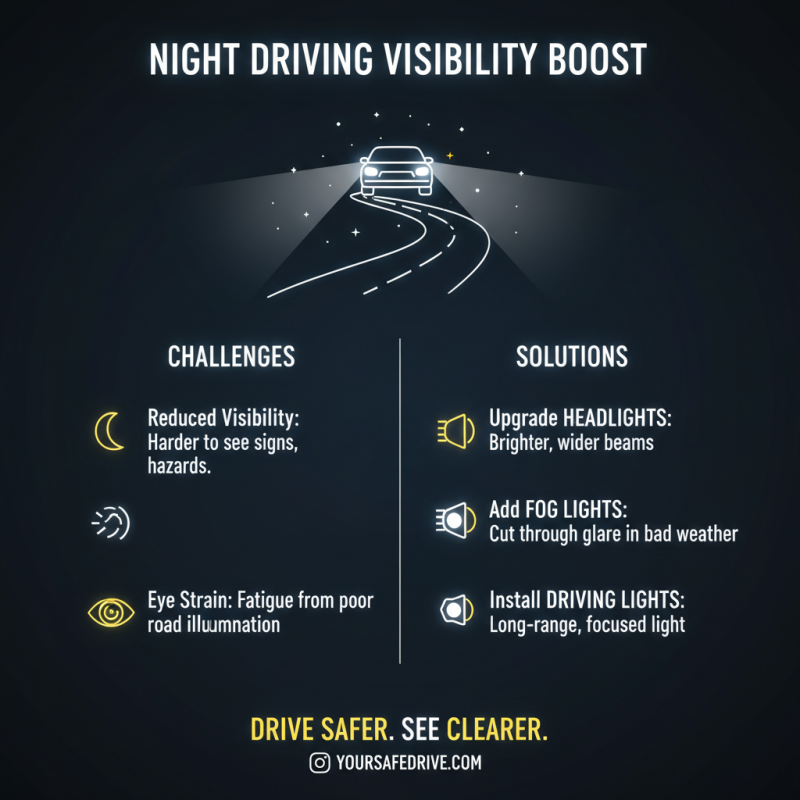
Driving at night can be challenging. Visibility often diminishes, making it hard to see road signs or potential hazards. Choosing the right driving lights can greatly enhance nighttime visibility. Various types of driving lights cater to different needs.
LED lights are excellent for brightness and longevity. They offer a wide beam pattern, illuminating more of the road. Halogen lights provide a warm light but may not be as bright. Their lifespan is shorter, and replacement can be a hassle. Another option is Xenon lights, known for their intense brightness. However, they can be blinding to oncoming traffic if not adjusted properly.
Some drivers prefer fog lights. These are designed to cut through the moisture in the air. Their low placement reduces glare, allowing for better visibility in foggy conditions. However, not all fog lights are created equal. Many still struggle with adequate illumination. Taking the time to research and select appropriate driving lights can make a noticeable difference. Creating a safe driving environment often requires a combination of these lighting options.
Factors to Consider When Choosing Driving Lights for Your Vehicle
When choosing driving lights for your vehicle, several factors play a crucial role. The brightness of the light is paramount. Measured in lumens, brighter lights offer better visibility. The beam pattern also matters. A well-defined beam will illuminate the road without blinding oncoming drivers.
Consider the type of driving light that fits your needs. For instance, LED lights are energy-efficient and long-lasting. They provide a focused beam that’s also less likely to attract unwanted attention. On the other hand, halogen lights are bright and offer a warm color but consume more energy.
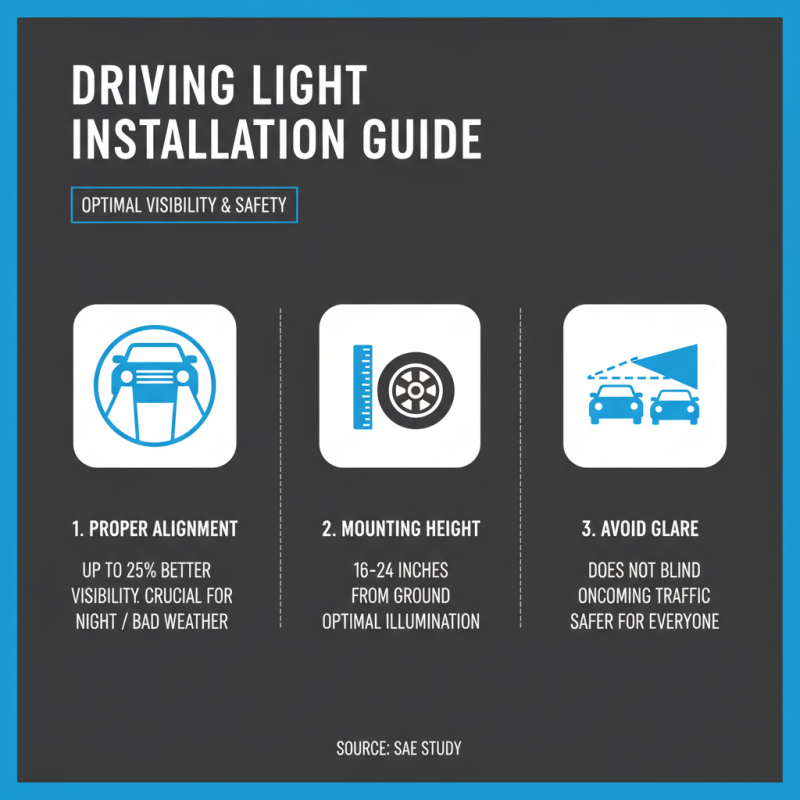
Tips: Always check local regulations before installing driving lights. Some areas have restrictions on brightness and height. This is essential to avoid fines. Also, think about the weight of the lights. Heavier options may require additional support. Proper installation is key. A poorly installed light can cause safety issues or become a distraction. Be mindful of how you use driving lights. Over-reliance can hinder your ability to adapt to changing road conditions.
Top 10 Driving Light Options for Better Visibility on the Road
| Option |
Type |
Lumen Output |
Beam Pattern |
Installation Ease |
Price Range |
| LED Light Bar |
LED |
10000-15000 Lumens |
Flood/Spot |
Moderate |
$100 - $300 |
| Halogen Fog Lights |
Halogen |
1200-2000 Lumens |
Wide |
Easy |
$50 - $100 |
| Xenon HID Lights |
HID |
3000-4500 Lumens |
Spot |
Moderate |
$200 - $500 |
| Off-Road Light Kit |
LED |
8000-12000 Lumens |
Flood/Combo |
Difficult |
$150 - $400 |
| Compact LED Lights |
LED |
5000-8000 Lumens |
Spot |
Easy |
$75 - $150 |
| Daytime Running Lights |
LED |
1000-3000 Lumens |
Diffuse |
Very Easy |
$30 - $70 |
| Lighted Running Boards |
LED |
2000-4000 Lumens |
Flood |
Easy |
$200 - $600 |
| Motorcycle Driving Lights |
LED |
2500-4000 Lumens |
Spot/Flood |
Moderate |
$80 - $200 |
| Work Light |
LED |
3000-5000 Lumens |
Flood |
Easy |
$50 - $150 |
| Custom Fit Fog Lights |
Halogen/LED |
800-2500 Lumens |
Wide |
Moderate |
$75 - $200 |
Comparative Analysis of LED, HID, and Halogen Driving Lights
When it comes to driving lights, three main types dominate the market:
LED, HID, and halogen.
Each option has its unique advantages and disadvantages.
Data shows that LED lights offer up to 80% more efficiency compared to traditional halogen.
This means they shine brighter while using significantly less power.
Additionally, LED lights tend to have a longer lifespan, often lasting up to 25,000 hours.
On the other hand, HID lights can produce an intense white light,
which enhances visibility in dark conditions. However, these lights may take time to warm up,
and their initial cost is typically higher.
Halogen lights are the most common and affordable option,
but they lag behind both LED and HID options in terms of durability and efficiency.
They often need replacement more frequently,
which can increase overall costs over time.
While choosing the right driving light, consider factors such as brightness, energy consumption, and lifespan.
LEDs shine bright and consume less energy,
but they can be more expensive upfront.
HID lights provide excellent visibility,
but they can present issues with warm-up times.
Halogen lights fit tight budgets but may not offer the same clarity.
Ultimately, the choice requires careful thought about your driving needs.
Top Brands and Models of Driving Lights Reviewed
When it comes to enhancing road visibility, selecting the right driving lights is crucial. Recent reports indicate that nearly 90% of traffic accidents occur in low-light conditions. This highlights the importance of effective lighting solutions. Various options exist, including LED, HID, and halogen driving lights. Each has unique attributes. LEDs are energy-efficient and long-lasting. HID lights are known for their brightness. Halogens offer a warm light but may require more frequent replacements.
Choosing a reputable model is essential. Look for lights with high lumen outputs. A lumen rating around 3,000-5,000 is often recommended for better visibility. Furthermore, durable materials can withstand harsh weather. Polycarbonate lenses are preferable due to their resistance to shattering.
Tips: Always consider beam patterns. A well-distributed beam helps illuminate the road without blinding oncoming drivers. Additionally, ensure driving lights are properly installed and aimed. Misaligned lights can create dangerous glare for other drivers. Regular maintenance is also necessary to keep lights functioning effectively.
A good set of driving lights can significantly reduce nighttime accident risks. So invest wisely.