Top 10 Driving Lights for Nighttime Visibility and Safety?
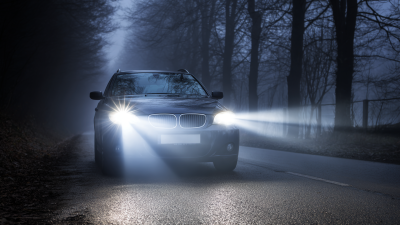
Driving lights play a crucial role in enhancing nighttime visibility. When you drive in darkness, standard headlights often fall short. Driving lights illuminate the road ahead, revealing potential hazards. This added brightness allows for safer travel.
Choosing the right driving lights can be overwhelming. With numerous options available, how do you decide? Some lights offer better beam patterns, while others focus on longevity. It's essential to consider how your choice affects night driving.
A good set of driving lights can transform your driving experience. They can boost your confidence at night or in poor weather. However, many drivers overlook this critical aspect of their vehicle. Reflect on your needs. Are your current lights sufficient? Investing in quality driving lights can improve safety.
Importance of Driving Lights for Nighttime Safety
Driving lights play a crucial role in enhancing nighttime visibility. Statistics show that nearly 50% of fatal accidents occur at night, while vehicle headlights illuminate only a limited distance. This limitation increases the risk of accidents due to poor visibility. Properly functioning and strategically placed driving lights can significantly reduce this risk. Studies indicate that adding auxiliary lights can extend visibility by up to 200 feet, making a substantial difference in hazardous conditions.
Moreover, bright driving lights improve peripheral vision, allowing drivers to spot obstacles sooner. Research highlights that peripheral awareness can decrease the chances of hitting pedestrians and animals by as much as 30%. However, many drivers neglect this critical aspect of vehicle safety. They may underestimate the importance of extra lighting. Inadequate lighting leads to reliance on standard headlights alone, which can lead to serious oversights on dark roads.
Choosing the right driving lights involves more than just brightness. Quality matters, and not all lights are made equal. Drivers should consider factors such as beam patterns and color temperatures. A well-designed beam pattern enhances depth perception and avoids blinding oncoming traffic. Ultimately, understanding these elements is vital for safety and accident prevention on the road.
Types of Driving Lights Available for Vehicles
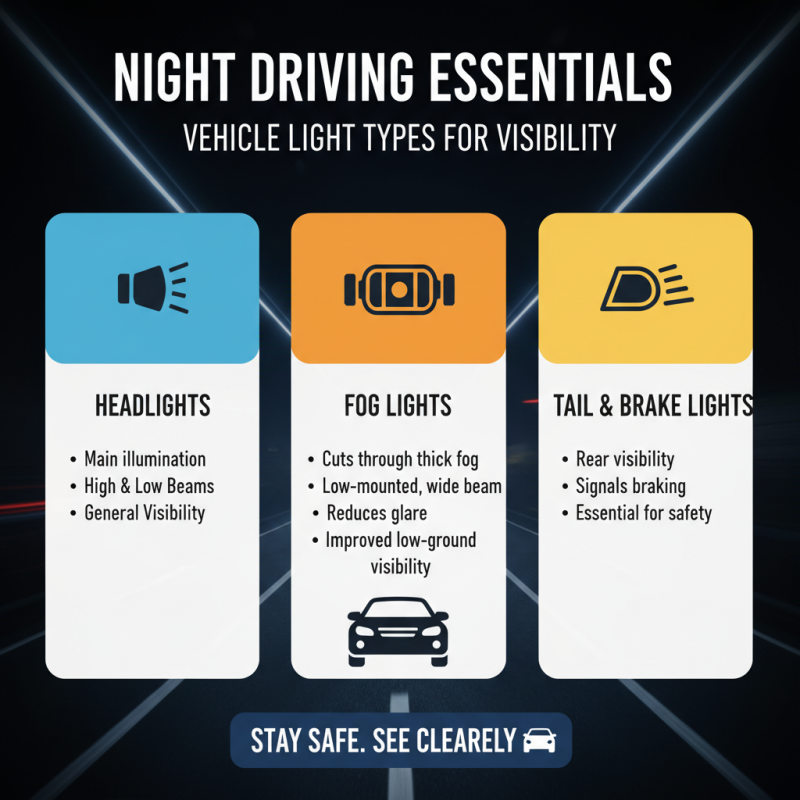
When it comes to driving at night, having the right lights is essential for visibility. Vehicle lights come in various types, each serving a specific purpose. Fog lights, for instance, are designed to cut through thick fog. They illuminate the road just enough without causing glare. These lights are usually mounted low on the vehicle, allowing a wider beam pattern.
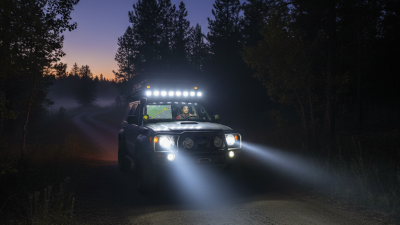
Another popular option is LED light bars. These lights provide a bright, wide ray that can enhance visibility drastically. Their sleek design can be mounted on roofs or bumpers. Many drivers find that LED light bars can dramatically improve nighttime driving. However, the installation can be tricky. It might require special mounting brackets or wiring.
Halogen lights remain a classic choice for many vehicles. They produce a warm light and are easier to replace. However, they tend not to last as long as newer technologies. Some drivers might find themselves replacing halogen bulbs frequently. The choice of driving lights ultimately depends on personal needs and driving conditions. Balancing cost with effectiveness can lead to a satisfying driving experience.
Top Features to Consider When Choosing Driving Lights
Choosing driving lights for nighttime visibility is crucial for safety. Brightness, beam pattern, and energy consumption are key features. A high lumen count means better illumination. Consider how the light spreads. Some lights offer a wide beam; others focus in a narrow path. Think about your driving conditions when selecting.
Tip: Match the beam pattern to your usual routes. If you drive on winding roads, a wider beam is beneficial. For highways, a longer focused beam can help spot distant hazards.
Durability is another factor. Driving lights need to withstand harsh weather and rough terrain. Look for lights that are waterproof and impact-resistant. However, be mindful of weight. Heavier lights may strain your vehicle’s electrical system.
Tip: Regularly check the condition of your lights. Any flickering or dimming could indicate a problem. After all, visibility matters. Consider user reviews about reliability. This can give insight into real-world performance.
Top 10 Driving Lights for Nighttime Visibility and Safety
| Model |
Brightness (Lumens) |
Beam Distance (meters) |
Power Consumption (Watts) |
Waterproof Rating |
Price (USD) |
| LED Light Bar A |
12000 |
500 |
120 |
IP68 |
$150 |
| Halogen Spotlight B |
800 |
300 |
55 |
IP65 |
$80 |
| Off-Road LED Cube C |
6000 |
200 |
60 |
IP67 |
$100 |
| HID Light Kit D |
3000 |
400 |
35 |
IP68 |
$120 |
| LED Work Light E |
7000 |
300 |
80 |
IP65 |
$90 |
| Fog Light F |
500 |
150 |
30 |
IP64 |
$70 |
| High Beam LED G |
10000 |
600 |
100 |
IP68 |
$130 |
| Ultra Slim LED H |
4500 |
200 |
30 |
IP66 |
$85 |
| Compact LED I |
3200 |
180 |
45 |
IP65 |
$75 |
| LED Strip Light J |
1500 |
100 |
10 |
IP62 |
$40 |
Comparative Analysis of Top 10 Driving Lights in the Market
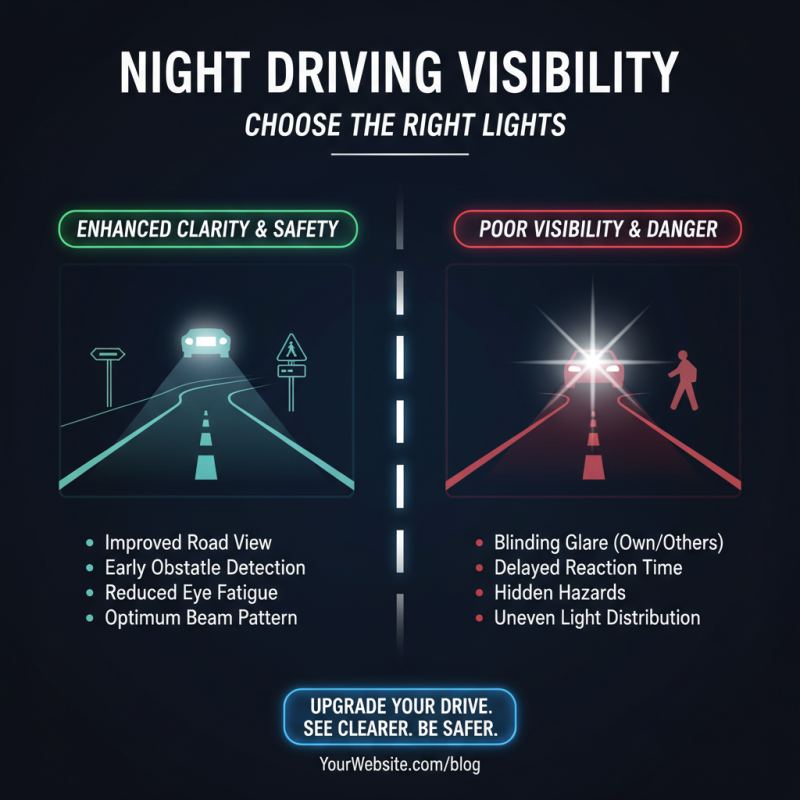
When driving at night, visibility is crucial. Choosing the right driving lights can change your experience. A good set enhances clarity and safety. Plus, poorly chosen lights can create glare and hinder your view.
Many lights use LED technology. They provide bright, white light that cuts through darkness. Some lights have varied beam patterns. These patterns help illuminate the road and surrounding areas. However, not all lights perform equally well. Some might be too focused, while others scatter light too widely. Finding a balance is essential.
It's also vital to consider installation. Not every light fits every vehicle. Sometimes modification is necessary. Drivers often overlook this detail. Moreover, brightness isn't everything. A light that is too bright can blind oncoming drivers. It's a delicate balance. Focus on lights that offer good visibility without causing issues for others.
Installation and Maintenance Tips for Optimal Performance
When installing driving lights, proper placement is crucial.
Mount them at a height that allows for maximum visibility without blinding oncoming drivers.
Aim for a position that is slightly below your vehicle's headlights. This ensures that the light spreads effectively and illuminates the road.
It’s vital to double-check your alignment after installation.
A small mistake can significantly affect night driving safety.
Regular maintenance is essential for optimal performance. Clean your lights often to remove dirt and grime.
This simple task enhances their brightness. Inspect the wiring for wear and tear, as loose connections can lead to a failure of the lights.
A quick visual check every few months can save you from being left in the dark.
Don't forget to replace any burned-out bulbs promptly. Waiting too long can severely compromise your nighttime visibility, putting you and others at risk.