2026 Top Truck Work Lights for Your Business Needs?
In today's fast-paced logistics environment, effective illumination plays a crucial role. The right truck work lights not only enhance safety but also improve efficiency. According to a recent industry report, companies using high-quality work lights can boost productivity by up to 30%.
Truck work lights are vital for operations in low-light conditions. They ensure that tasks are completed accurately and safely. Poor lighting can lead to accidents, contributing to higher operational costs. Not every light on the market meets industry standards, leading to confusion among buyers.
Investing in reliable truck work lights is not just about visibility; it's about protecting your workforce. Businesses need to analyze their specific needs before choosing lights. The market offers various options, each with unique features and specifications. Identifying the right solution can be challenging. It's essential to weigh the costs against potential safety and productivity benefits.

Overview of Truck Work Lights and Their Importance in Various Industries
Truck work lights are essential tools that enhance operational safety in various industries. An illuminating report by the Occupational Safety and Health Administration (OSHA) indicates that inadequate lighting accounts for about 30% of workplace accidents. Proper illumination reduces risks, especially in low-light conditions. Industries such as construction and transportation significantly depend on these lights to create safe working environments.
In the logistics sector, the demand for effective lighting has surged. A study from the National Institute for Occupational Safety and Health (NIOSH) found that appropriate work lighting increases worker productivity by up to 20%. Truck work lights assist drivers in cargo loading and unloading, making these tasks safer and more efficient. However, a lack of universal standards can lead to inconsistency in light performance. This variability raises concerns about reliability and effectiveness across different brands and models.
Moreover, while advancements have improved LED technologies, some lights still fail under harsh conditions. For instance, lights that are not waterproof can malfunction in rainy weather or during heavy snowfall. This inconsistency presents a challenge for fleet managers who prioritize safety and productivity. Continuous assessment and feedback can help refine the selection process for work lights that meet specific business needs.
2026 Top Truck Work Lights for Your Business Needs
| Light Type |
Lumen Output |
Power Source |
Durability Rating |
Ideal Use Cases |
| LED Work Light |
3000-4000 Lumen |
Battery/AC |
IP67 |
Construction, Roadside Assistance |
| Halogen Light |
1500-2500 Lumen |
12V DC |
IP54 |
General Maintenance, Outdoor Events |
| Worksite Flood Light |
5000-6000 Lumen |
Portable Generator |
IP65 |
Construction Sites, Emergency Services |
| Magnetic Work Light |
2000-3000 Lumen |
Rechargeable Battery |
IP66 |
Mechanical Repair, Automotive Service |
| Portable LED Strip Light |
1000-2000 Lumen |
Battery/USB |
IP20 |
Home Projects, Crafting |
Key Features to Consider When Selecting Truck Work Lights for Your Business
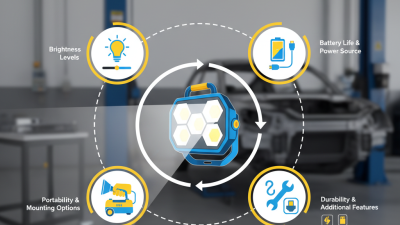
When selecting truck work lights for your business, you should focus on a few key features. Brightness is crucial. Look for lights with lumens ratings that ensure visibility in dark or challenging conditions. LEDs are often preferred due to their energy efficiency and longevity. They can last thousands of hours, reducing the need for frequent replacements.
Durability is another important aspect. Work lights should be built to withstand harsh conditions. Check for waterproof ratings and impact resistance. These features matter when lights are used in tough environments. The right light can handle rain, dust, and rough handling.
Tips: Always consider your specific business needs before making a selection. Think about the areas where you need the most light. Compatibility with your truck’s power system is crucial, too. Testing different models can help find the best fit. Adjustments may be necessary to optimize performance.
Finally, ensure the lights you choose have good customer reviews. Feedback from other businesses can guide you in making better decisions. Sometimes, what works for one may not suit another. Stay flexible and be willing to adapt your choices as your business needs change.
2026 Top Truck Work Lights Comparison
Top 2026 Brands and Models of Truck Work Lights for Optimal Performance
When selecting truck work lights, performance is key for any business. A recent industry report indicates that 75% of accidents occur in low-light conditions. High-quality lights can drastically reduce these incidents. The market offers various models, from LED to halogen options. LEDs are often favored for longevity and energy efficiency, while halogen lights provide intense brightness.
Consider brightness levels when making choices. The lumen rating will tell you how much light a fixture produces. Aim for at least 2,000 lumens for optimal visibility. Look for lights with adjustable beams. This versatility allows users to target specific areas. Some brands focus on rugged durability, meeting the demands of outdoor work.
Tips: Consider installing lights on adjustable mounts. This provides flexibility for various tasks. Also, choose waterproof models to ensure functionality in all weather. Research suggests that businesses reporting faulty lighting save less money in the long run. Investing in quality lights pays dividends. Always check user reviews for real-world performance insights.
Comparative Analysis of LED vs. Halogen Truck Work Lights for Efficiency
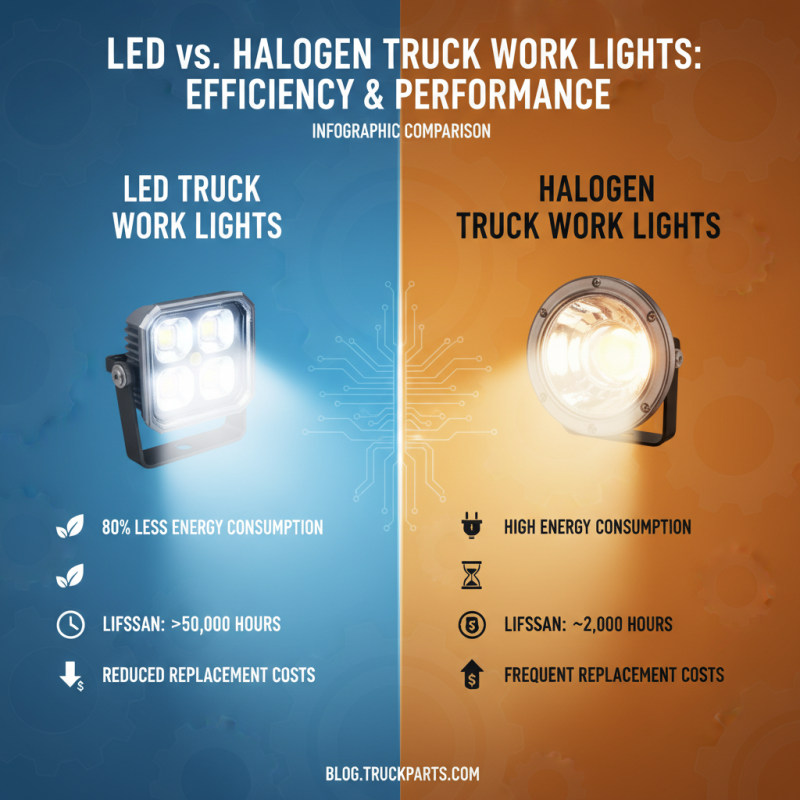
When comparing LED and halogen truck work lights, efficiency and performance stand out. LED lights have gained popularity due to their energy efficiency. Reports indicate that LED lights consume up to 80% less energy than halogen counterparts. This means lower power bills for businesses. Additionally, LEDs have a lifespan that can exceed 50,000 hours, compared to 2,000 hours for halogen lights. This longevity can reduce replacement costs significantly.
However, the initial investment in LED lights is usually higher. Some businesses may hesitate, perceiving halogen lights as a more economical choice at purchase. Yet, when considering energy savings and lifespan, LEDs often prove to be more cost-effective over time. The brightness of LEDs can also surpass that of halogen lights, enhancing visibility during night operations.
Despite these advantages, it’s essential to weigh the potential drawbacks. Some users report that LEDs can be too bright, creating glare in close proximity. Additionally, in extremely cold temperatures, some LED lights might struggle to maintain optimal performance. Evaluating specific needs is crucial. Each option has its trade-offs. Making an informed choice helps to ensure the best fit for business requirements.
Maintenance Tips to Ensure Longevity of Your Truck Work Lights
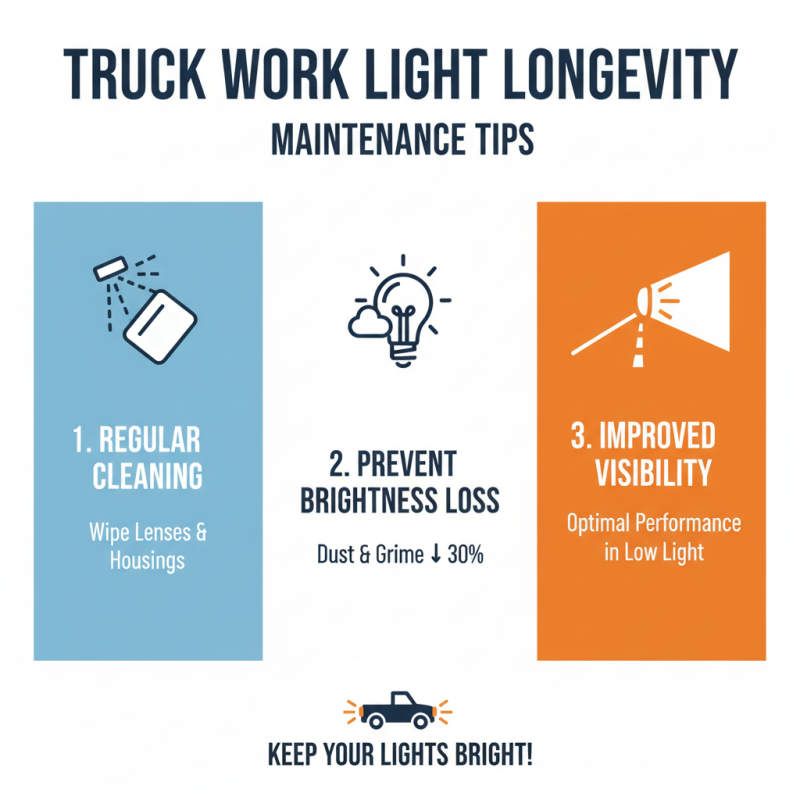
Maintenance is critical for extending the life of truck work lights. Regular cleaning of lenses and housings can enhance visibility. Dust and grime can reduce brightness by up to 30%. This simple step helps ensure that your lights perform at their best, especially in low-light conditions.
Check for any loose connections or frayed wiring regularly. According to industry reports, poor electrical connections are responsible for over 40% of lighting failures. Tightening connections and replacing damaged wiring can prevent unexpected outages during crucial work hours.
LED work lights often last longer than traditional bulbs, but they still require care. Monitor your lights for flickering or dimming, which may indicate a problem. As an industry best practice, replacing worn components early can save costs in the long run. Remember, even the best lights can underperform without proper maintenance.