How to Choose the Best Off Road Light for Your Vehicle in 2025
In 2025, choosing the best Off Road Light for your vehicle requires careful consideration of various factors to enhance both safety and performance during your adventurous excursions. According to industry expert, Mark Reynolds, a notable figure in off-road lighting solutions, "The right Off Road Light can transform your vehicle into a reliable companion in the darkest terrains." With advances in technology and design, the selection process can be overwhelming for enthusiasts ranging from beginners to seasoned adventurers.
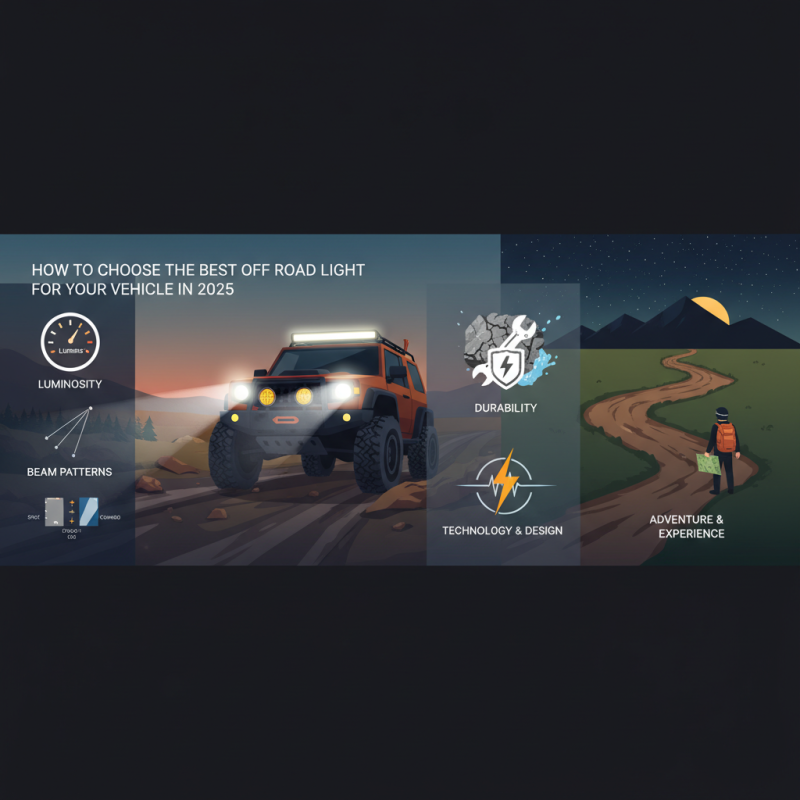
Understanding the fundamental aspects of Off Road Lights—such as luminosity, beam patterns, and durability—will empower you to make an informed decision. Whether you're tackling muddy trails or rocky landscapes, the ideal lighting can dramatically improve visibility and maneuverability. As you navigate this vast market, it’s critical to prioritize not only the technical specifications but also how these lights enhance your overall off-road experience. Through this guide, we aim to equip you with the knowledge required to choose the perfect Off Road Light that suits your needs and keeps your adventures illuminated and safe.
Understanding Different Types of Off-Road Lights Available in 2025
When selecting the best off-road lights for your vehicle in 2025, it's essential to understand the various types of lights available on the market. Off-road lights generally fall into three main categories: LED, HID (High-Intensity Discharge), and halogen. According to industry reports, LED lights are emerging as the preferred choice due to their longevity and energy efficiency. In fact, while halogen lights typically last around 500-1,000 hours, LEDs can go for more than 30,000 hours, making them a more economical option in the long run.
HID lights are known for their brightness, producing up to three times more lumens than halogen lights, which can be advantageous for off-roading in extremely dark conditions. However, they require a warm-up period to reach optimal brightness, which may not always be practical. Halogen lights, although less energy-efficient and with shorter lifespans, are still a viable option for those on a budget or for casual off-road enthusiasts. Data from the Off-Road Lighting Alliance indicates that as of 2025, nearly 70% of off-road lighting purchases are LED-based, confirming their dominance in the market.
Moreover, it's crucial to consider additional specifications such as lumens, beam patterns, and color temperatures when choosing off-road lights. A higher lumen count typically indicates a brighter light; however, the beam pattern determines how the light is distributed. A narrow beam can provide longer-distance illumination, while a wider beam is better for close-range visibility. Industry studies suggest that a color temperature around 5000K offers the best balance of visibility and comfort, enhancing nighttime driving experiences for off-roaders.
How to Choose the Best Off Road Light for Your Vehicle in 2025 - Understanding Different Types of Off-Road Lights Available in 2025
| Light Type |
Brightness (Lumens) |
Beam Pattern |
Power Consumption (W) |
Durability Rating (IP) |
Typical Use |
| LED Light Bar |
12,000 - 36,000 |
Flood/Spot |
80 - 200 |
IP68 |
General Off-Roading |
| Halogen Fog Lights |
1,200 - 3,500 |
Wide |
55 - 100 |
IP67 |
Low Visibility Conditions |
| Incandescent Off-Road Lights |
500 - 1,500 |
Flood |
35 - 100 |
Not Rated |
Supplemental Lighting |
| HID Off-Road Lights |
3,000 - 10,000 |
Spot |
35 - 55 |
IP65 |
Long-Distance Visibility |
| Spot Light |
5,000 - 12,000 |
Narrow |
20 - 60 |
IP67 |
Focused Light for Distance |
Key Features to Consider When Selecting Off-Road Lights for Your Vehicle
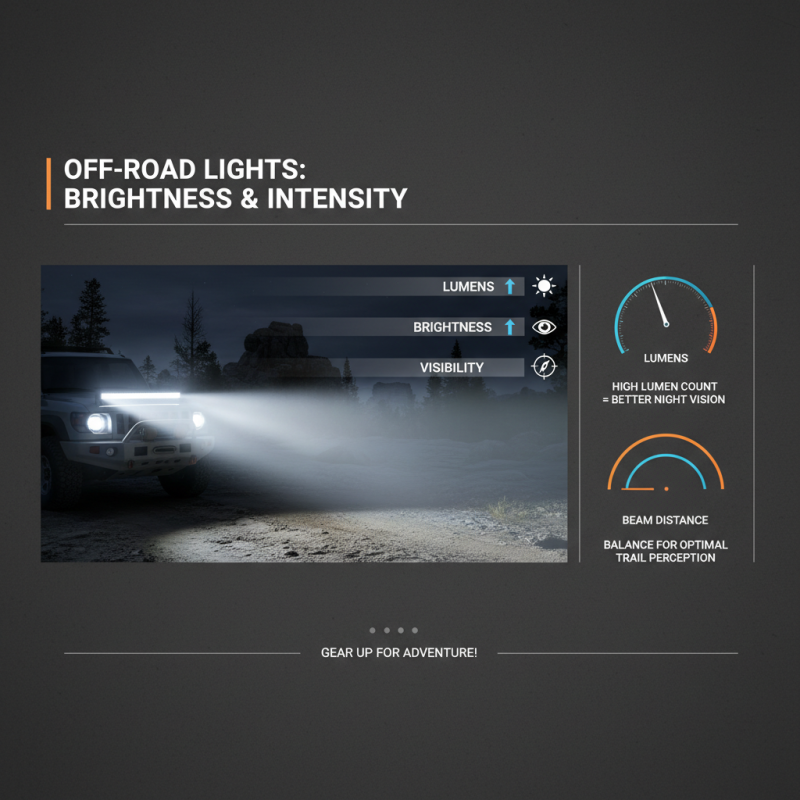
When selecting off-road lights for your vehicle, one of the most critical features to consider is the brightness and intensity of the output. Measured in lumens, the light's output determines how well you can see during your adventures. A higher lumen count typically means brighter light, which is beneficial for navigating unlit paths and enhancing visibility in various conditions. It’s important to balance brightness with beam distance and width, ensuring that the lights not only illuminate your immediate surroundings but also provide adequate long-distance visibility.
Another essential aspect is the light's durability and weather resistance. Off-road conditions can be harsh, so look for lights that are built to withstand impact, dust, and moisture. An IP rating can indicate a light's ability to resist water and dust ingress; for off-road applications, an IP67 rating or higher is recommended. Additionally, consider the installation process and adjustability of the lights. Lights that offer versatility in mounting options and angled beams can significantly enhance your driving experience, allowing you to customize your lighting setup based on specific terrains and conditions.
Evaluating Brightness and Beam Patterns for Optimal Off-Road Visibility
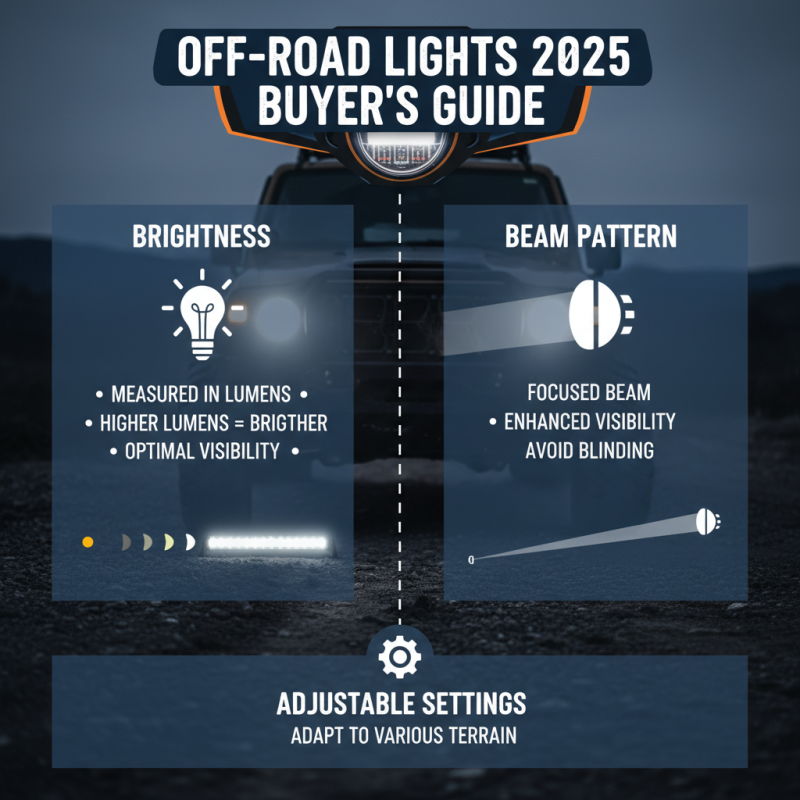
When selecting the best off-road light for your vehicle in 2025, evaluating brightness and beam patterns is crucial for achieving optimal visibility during your adventures. Brightness is often measured in lumens; higher lumen counts indicate brighter light. However, it's essential to choose a light that not only shines brightly but also provides a focused beam that enhances your visibility without blinding oncoming drivers. Off-road terrains can be unpredictable, so look for lights with adjustable settings to adapt to various conditions.
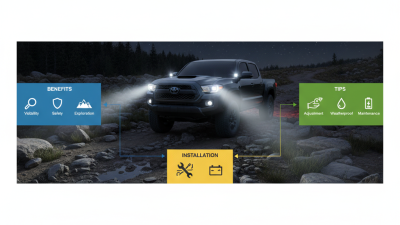
Tips: Consider going for lights with multiple beam patterns, such as spot and flood. Spot beams offer long-distance illumination, making it easier to see obstacles far ahead. In contrast, flood beams illuminate a wider area, helping to navigate trails more effectively. A combination of both ensures a balanced and comprehensive view of your environment, enhancing safety on rugged paths.
Additionally, pay attention to the color temperature of the light. Warmer lights, around 3000K to 4000K, provide better contrast in foggy or rainy conditions, while cooler lights can appear brighter in clear weather. Ultimately, choosing the right combination of brightness and beam patterns tailored to your specific off-road driving needs will significantly improve your nighttime visibility, leading to a safer and more enjoyable driving experience.
Assessing Durability and Weather Resistance of Off-Road Light Options
When selecting off-road lights for your vehicle in 2025, assessing durability and weather resistance is crucial to ensure long-lasting performance in challenging environments. Off-road adventures often expose lights to rough terrains and extreme weather conditions, which can quickly lead to damage if the lights are not adequately rugged. Look for lights made from robust materials, such as high-grade aluminum or polycarbonate, which can withstand impacts and resist corrosion.
Additionally, weather resistance is an essential feature that ensures your off-road lights can endure rain, snow, and dust. Opt for lights with a high IP (Ingress Protection) rating, indicating they are sealed against the elements. Waterproof and dustproof designs not only enhance reliability but also provide peace of mind during your outdoor excursions. Evaluating these two critical factors—durability and weather resistance—will help you choose off-road lights that are not only powerful but also resilient, ready to illuminate your path regardless of the conditions.
Durability and Weather Resistance Assessment of Off-Road Lights in 2025
Budgeting for Off-Road Lights: Costs, Installation, and Long-Term Value
When budgeting for off-road lights in 2025, it’s important to consider not only the initial costs but also installation and long-term value. The average price range for off-road lights can vary significantly based on types and features, generally falling between $100 and $1,000. According to recent industry reports, LED lights tend to offer the best balance of cost and performance, with an average lifespan of over 50,000 hours, proving their long-term value despite a higher upfront cost compared to traditional halogen options.
Installation costs can also be a significant factor in your total budget. Professional installation ranges from $50 to $200, depending on the complexity of the wiring and mounting required. However, for those comfortable with DIY projects, learning how to install off-road lights can save you a substantial amount. If you're considering this approach, ensure to use high-quality connectors and weatherproofing techniques to protect your investment against harsh conditions.
Tips: Always consider investing in a wiring harness to simplify the installation process and reduce the risk of electrical issues. Additionally, think about how often you'll use the lights; infrequent users may lean towards budget options, whereas dedicated off-road enthusiasts might justify the expenses of higher-end lights for superior performance and durability.