Top 10 Driving Lights Tips to Enhance Your Nighttime Visibility
When it comes to driving at night, enhancing visibility is crucial for safety. According to renowned automotive lighting expert Dr. Emily Carter, "The right driving lights can make all the difference in how well you see and are seen on the road after dark." With darkness playing a challenging role in road conditions, understanding the optimal use of Driving Lights is more important than ever.
This guide will explore the top 10 tips to improve nighttime visibility, ensuring drivers can navigate safely and confidently. From selecting the appropriate intensity of light to positioning the fixtures correctly, these insights will empower drivers to enhance their nighttime driving experience. By leveraging expert advice and industry best practices, you can maximize the effectiveness of your Driving Lights and enjoy a safer journey after sunset.
Understanding the Importance of Driving Lights for Nighttime Safety
Driving at night can be a daunting experience, especially when visibility is compromised. Understanding the importance of driving lights is crucial for ensuring nighttime safety. Proper lighting not only illuminates the road ahead but also helps in making your vehicle more visible to other drivers, reducing the chances of accidents. Investing in quality driving lights can significantly enhance your view of the environment around you, allowing for better reaction times and increased awareness of potential hazards.
To maximize the effectiveness of your driving lights, consider the following tips. First, make sure that your lights are correctly aimed. Misaligned lights can blind other drivers and diminish your own visibility. Second, keep the lights clean and free of debris. Regularly check that your driving lights are clear of dirt and grime, as this can vastly improve illumination. Lastly, consider supplementing your standard headlights with fog lights or auxiliary lights. These additional lighting options can provide a wider field of view and cut through heavy rain or fog effectively.
By incorporating these tips and understanding the fundamental role of driving lights, you can ensure a safer nighttime driving experience. Not only will you enhance your visibility, but you will also contribute to a safer environment for all road users.
Types of Driving Lights: Choosing the Right Ones for Your Vehicle
When it comes to enhancing nighttime visibility while driving, choosing the right type of driving lights is crucial. There are various options available, each designed to meet specific needs and preferences.
Halogen lights are a popular choice due to their affordability and ease of replacement. They emit a warm light that can effectively illuminate the road ahead, but may not provide the most extended reach compared to other options.
For those seeking brighter and more energy-efficient solutions, LED lights have gained popularity. They last significantly longer than halogen bulbs and offer superior brightness, ensuring better visibility in low-light conditions.
Another worthy option is xenon or HID (High-Intensity Discharge) lights, which produce a powerful beam that can reach greater distances than traditional halogen lights. They have a bluish tint, which some drivers find appealing. However, it’s important to verify compatibility with your vehicle, as tinting and brightness can sometimes cause glare for oncoming traffic if not properly adjusted.
Ultimately, selecting the right driving lights for your vehicle involves considering factors such as brightness, lifespan, and compatibility with your existing lighting system, ensuring that you remain safe and visible on the roads at night.
Positioning Your Driving Lights for Maximum Visibility and Effectiveness
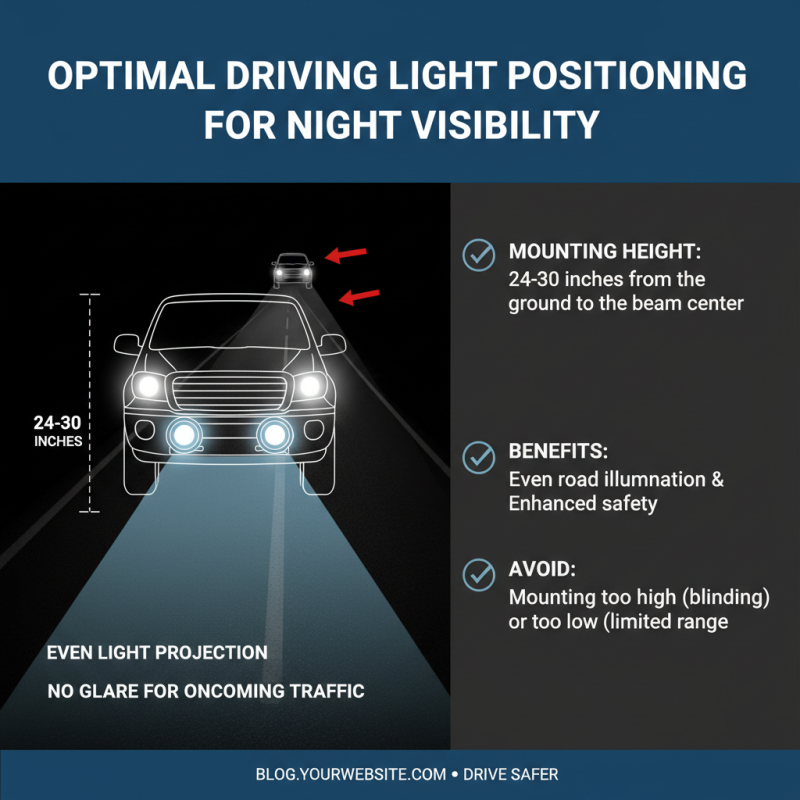
When it comes to enhancing nighttime visibility, the positioning of your driving lights plays a crucial role in ensuring optimal effectiveness. One of the most important factors to consider is the height at which the lights are mounted. Ideally, driving lights should be installed at a height that allows them to project light evenly across the road without blinding oncoming drivers. A common recommendation is to mount lights in a position where the center of the beam is approximately 24 to 30 inches above the ground. This height helps achieve a good balance between illuminating the road ahead and maintaining safety for other motorists.
In addition to height, the angle of the driving lights also significantly influences visibility. It is vital to angle the lights correctly to prevent excessive glare and to ensure that the light is directed toward the road and the immediate surroundings. A slight downward tilt can help achieve this, allowing the lights to cover more ground without creating a blinding effect for other drivers. Testing the lights during the night and making slight adjustments can greatly improve their effectiveness, ensuring that they illuminate potential hazards and obstacles while providing a clearer view of the road ahead. Proper positioning not only enhances visibility but also contributes to a safer driving experience during nighttime travel.
Maintenance Tips to Ensure Optimal Performance of Your Driving Lights
Driving lights are essential for enhancing visibility during nighttime driving, but their effectiveness greatly depends on proper maintenance. Regular inspection of the lights is crucial for optimal performance. According to a study published by the National Highway Traffic Safety Administration, poorly maintained lights can reduce visibility by over 50%, increasing the risk of accidents. Drivers should routinely check for any condensation inside the light housing, scratches on the lens, or any signs of electrical damage that may impair the light output.
Additionally, cleaning the lenses regularly can significantly improve illumination. Research indicates that dirty or foggy lenses can reduce light output by up to 70%. A mixture of soap and water or specialized cleaning solutions can be used to restore clarity. Furthermore, ensuring that the electrical connections are secure can prevent flickering or total light failure. Industry reports emphasize that conducting a thorough inspection at least twice a year can lead to a safer driving experience and prolong the lifespan of the driving lights. By adhering to these best practices, drivers can maximize their nighttime visibility and enhance overall road safety.
Legal Considerations for Using Additional Driving Lights on the Road
When considering the addition of extra driving lights for improved nighttime visibility,
understanding the legal considerations is crucial.
Different jurisdictions have specific regulations regarding the installation and use of additional lights, which can vary significantly.
For instance, some areas may limit the brightness or color of lights that can be used,
often prohibiting blue or flashing lights that are reserved for emergency vehicles.
It's essential to check local laws to ensure compliance and avoid potential fines or penalties.
Furthermore, proper installation and positioning of additional lights can also play a role in legality.
Lights that are improperly angled can cause glare to oncoming traffic, posing safety risks and leading to legal issues if involved in an accident.
Drivers should ensure that their additional lighting does not obstruct any existing vehicle lights
and is aimed correctly to provide optimal visibility without affecting the safety of others on the road.
By being aware of the legal framework surrounding additional driving lights,
drivers can enhance their nighttime visibility responsibly and safely.